
A study group for certifications is a structured, small-group peer collaboration designed to improve mastery of exam material and increase pass rates. Unlike casual review sessions, a certification study group operates with defined roles, scheduled meetings, and active learning methods such as the teach-back technique and group quizzes. Research shows that structured groups meeting weekly for 2 hours over 12 weeks achieve a 93% pass rate. That figure reflects the power of consistent, accountable collaboration over solo cramming. Whether you are preparing for CompTIA Security+, PMP, or a CPA exam, understanding what a study group for certifications actually involves is the first step toward using one effectively.
What is a study group for certifications, and how does it work?
A certification study group is a peer-learning structure where a small number of candidates meet regularly to review exam content, test each other’s knowledge, and hold one another accountable. The term “study group” is informal, but the underlying method aligns with established educational frameworks such as cooperative learning and spaced repetition. These groups work because they force active engagement with material rather than passive reading.
The core mechanism is simple. Each member takes responsibility for a section of the exam’s body of knowledge, masters it, and then teaches it to the group. This teach-back method, widely used in professional certification prep, helps members uncover knowledge gaps faster than any passive review technique. Teaching a concept requires you to understand it at a deeper level than simply recognizing the right answer on a practice question.

Group quizzes and scenario-based problem solving add another layer. For certifications like the PMP, which tests situational judgment, study groups connect abstract concepts to practical exam logic in ways that solo study rarely achieves. Members challenge each other’s reasoning, which sharpens critical thinking under exam conditions.
How do study groups improve certification exam success?
The evidence for study group effectiveness is direct. Cohorts using collaborative, weekly 2-hour sessions over a 12-week period achieve a 93% pass rate. That result does not happen by accident. It reflects the compounding effect of consistent review, peer accountability, and active learning methods applied week after week.
The benefits extend beyond knowledge retention. Certification prep is a long, demanding process, and emotional support from study groups reduces isolation, test anxiety, and burnout. These are among the most common reasons candidates abandon their study plans before exam day. A group creates a built-in support network that keeps motivation intact through the difficult middle weeks of preparation.
Key study group activities for certifications include:
- Teach-back sessions: Each member masters one knowledge domain and presents it to the group, exposing gaps and reinforcing understanding.
- Group practice exams: Timed quizzes taken together, followed by group discussion of wrong answers, build exam-day confidence.
- Scenario walkthroughs: Members work through situational questions together, debating the best answer and the reasoning behind it.
- Flashcard drills: Rotating through vocabulary and definitions keeps foundational knowledge sharp between deeper review sessions.
- Progress check-ins: Brief weekly updates on individual study hours and completed material maintain accountability.
Pro Tip: Assign each member a different knowledge domain to master before each session. When everyone arrives as the “expert” on their topic, the group covers more ground in less time and the teach-back discussions become genuinely useful.
What makes a certification study group effective?
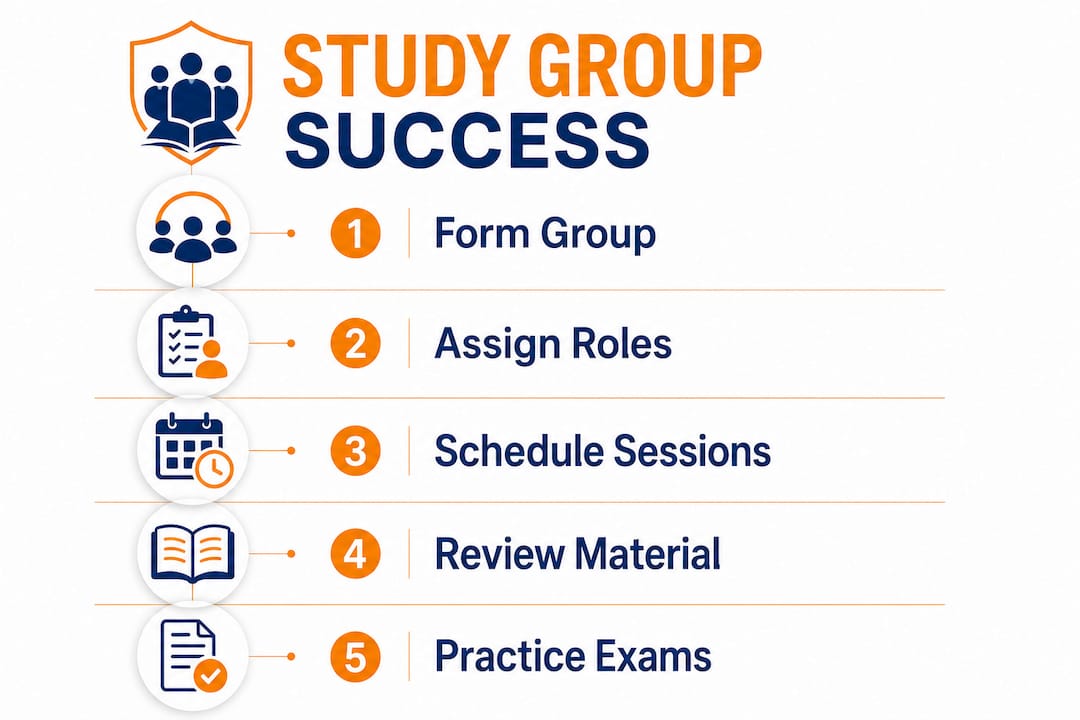
Group size is the most underestimated factor in study group effectiveness. High-impact groups cap at 3–5 members and enforce preparation accountability to keep sessions productive. A group of 8 or 10 people sounds like more coverage, but it produces scheduling conflicts, uneven participation, and sessions that drift into social conversation.
Meeting structure matters just as much as size. The following elements define a well-run certification study group:
- Fixed weekly schedule: Commit to a recurring day and time. Consistency builds the habit and prevents the “we’ll reschedule” drift that kills groups.
- Two-hour session limit: Weekly 2-hour sessions with assigned topics and collaborative problem solving drive retention without causing fatigue.
- Rotating facilitator role: One member runs each session with a prepared agenda. Rotating this role keeps everyone invested and prevents one person from dominating.
- Subject leads: Assign members to specific exam domains based on their strengths. A member with a networking background leads the network security section; a member with a compliance background leads the governance domain.
- Accountability tools: Shared calendars, commitment contracts, and progress tracking systems are not optional extras. They are the infrastructure that sustains engagement over a 10–12 week preparation period.
- No-show policy: Agree upfront on what happens when a member misses a session without notice. A clear policy prevents resentment and protects the group’s momentum.
Pro Tip: Draft a one-page group agreement in your first session. Cover meeting times, preparation expectations, and the no-show policy. Signing it together creates a sense of shared commitment that casual verbal agreements do not.
How to form and manage a certification study group
Finding motivated peers is the first practical challenge. Professional associations such as ISACA, (ISC)², and CompTIA all maintain member communities where candidates connect. LinkedIn groups organized around specific certifications are another reliable source. For candidates already employed in IT or cybersecurity, the workplace is often the most convenient place to find peers pursuing the same credential.
Once you have identified potential members, evaluate fit carefully. Groups with balanced skill sets and compatible schedules maintain momentum better than groups assembled purely by availability. A member who is three months ahead of the group in their study plan will lose patience. A member who is three weeks behind will slow everyone down.
The table below outlines the key decisions to make when forming your group:
| Decision | Recommended approach |
|---|---|
| Group size | 3–5 members for maximum participation |
| Meeting format | Weekly in-person, virtual, or hybrid sessions |
| Session length | 2 hours per meeting |
| Preparation period | 10–12 weeks before the exam date |
| Accountability method | Shared calendar plus written commitment contract |
Virtual and hybrid formats work well when members are geographically dispersed. Platforms that support screen sharing and breakout rooms replicate most of the functionality of in-person sessions. The key is to agree on the format before the group starts, not after scheduling conflicts arise. You can find practical guidance on managing virtual study sessions as part of a broader IT learning strategy.
Handling pace differences is the most common management challenge. A member falling 1–2 weeks behind the group’s study schedule can stall progress as sessions shift toward remediation instead of advancement. Address this early with peer coaching rather than group pressure. Pair the struggling member with a stronger one for a focused catch-up session outside the regular meeting.
What are the common pitfalls in certification study groups?
The most damaging pitfall is treating study group sessions as the primary study method. The most successful certification candidates use a hybrid approach where the majority of study time is solo, complemented by scheduled group discussion. Group time works best for clarifying confusion, testing understanding, and building confidence. It does not replace the volume of individual reading and practice that certification exams demand.
Common pitfalls to avoid include:
- Over-large groups: More than 5 members creates coordination problems and reduces individual participation.
- Unprepared members: A member who arrives without completing the assigned reading wastes everyone’s time and erodes trust.
- Agenda-free sessions: Sessions without a structured agenda drift into general conversation and cover far less material.
- Inconsistent attendance: Irregular participation breaks the group’s rhythm and forces repetition of previously covered content.
- Ignoring solo study: Relying entirely on group sessions leaves critical knowledge gaps that only individual practice can fill.
“Treating study group sessions like professional meetings, with time-boxed agendas and rotating facilitators, is the single most effective way to keep sessions productive. Groups that skip this structure consistently underperform those that apply it.”
Exam preparation tips consistently reinforce that preparation quality matters more than preparation quantity. Arriving at each session ready to contribute, not just ready to receive, is what separates high-performing groups from those that dissolve after three weeks.
Pro Tip: Set a “preparation gate” rule: if a member has not completed the assigned material, they observe the session but do not lead discussion. This protects the group’s time and creates a strong incentive to stay current.
Key Takeaways
Certification study groups deliver the highest pass rates when they combine structured weekly sessions, a capped membership of 3–5 members, active learning methods, and a clear accountability system that keeps every member prepared and present.
| Point | Details |
|---|---|
| Group size matters | Cap membership at 3–5 members to maximize participation and minimize scheduling conflicts. |
| Structure drives results | Weekly 2-hour sessions with rotating facilitators and prepared agendas produce measurably better outcomes. |
| Teach-back accelerates learning | Assigning members to master and present specific domains uncovers gaps faster than passive review. |
| Solo study is non-negotiable | Group sessions complement individual study; they do not replace the volume of solo practice required. |
| Accountability sustains momentum | Shared calendars and written commitment contracts keep members prepared and engaged across a 10–12 week period. |
Why I think most candidates underestimate the emotional side of group study
Most articles on certification study groups focus on the mechanics: group size, session length, the teach-back method. Those elements matter. But the factor I have seen make or break candidates more than any structural detail is emotional sustainability.
Certification prep is genuinely hard. The material is dense, the exam dates feel distant, and the pressure to pass on the first attempt is real. Solo study amplifies all of that. You sit with your doubts and your practice exam scores and no one to tell you whether your confusion is normal or a sign that you are falling behind. A study group changes that dynamic completely. Emotional support from peers is a key motivator in sustaining candidates through long, intense study periods. That is not a soft benefit. It is a practical one.
The candidates I have watched succeed consistently are the ones who treat their study group like a professional commitment. They show up prepared. They contribute actively. They check in on each other between sessions. The group becomes a source of accountability and encouragement at the same time. That combination is hard to replicate with any solo study tool. If you are serious about passing your certification on the first attempt, building the right group around you is one of the most practical decisions you can make. Pair that with solid individual exam strategies and you have a preparation system that actually holds up under pressure.
— Alden
Totalcyber’s certification training programs for exam-ready candidates
Totalcyber builds certification preparation programs that go beyond textbook review. Every course is designed around the practical skills and exam strategies that candidates actually need on test day.
Totalcyber’s expert-led courses align with CompTIA, (ISC)², and other industry-recognized certification standards. Hands-on labs and real-world scenarios give candidates the applied knowledge that group discussions alone cannot provide. Whether you are starting from scratch or accelerating an existing study plan, Totalcyber’s cybersecurity training programs give you the structured foundation your study group can build on. Explore the full course catalog at Total Cyber Academy and find the program aligned with your certification target.
FAQ
What is a study group for certifications?
A certification study group is a small, structured peer-learning group where candidates meet regularly to review exam content, teach each other knowledge domains, and hold one another accountable. The goal is to improve comprehension and increase the likelihood of passing on the first attempt.
How many people should be in a certification study group?
The ideal size is 3–5 members. Groups larger than 5 create scheduling conflicts and reduce individual participation, which lowers overall session quality.
How often should a certification study group meet?
Weekly meetings of 2 hours each are the standard recommendation, with increased frequency in the final weeks before the exam date. Consistency matters more than session length.
What activities work best in a certification study group?
The teach-back method, group practice exams, and scenario-based walkthroughs are the most effective activities. Each one forces active engagement with the material rather than passive review.
Should I rely entirely on a study group to pass my certification exam?
No. The most successful candidates use group sessions for roughly 20% of their total study time and dedicate the remaining 80% to individual study. Group sessions clarify and reinforce; solo study builds the foundational knowledge volume that exams require.