
A skill set online is the collection of job-relevant abilities you build and verify through online courses, hands-on labs, and digital credentials — structured to meet real employer requirements, not just to fill a resume. For U.S. job seekers, the most effective starting point is pairing an industry-recognized certification path (CompTIA, ISC2, or EC-Council) with deliberate, lab-based practice that produces verifiable artifacts. Before anything else, run a skills inventory against a target job description, then enroll in a verified beginner course that includes hands-on labs from day one.
- Define your target role first. A credential without a job target is just a certificate.
- Prioritize hands-on labs alongside video content — passive watching does not translate to workplace competence.
- Verify what you learn with a proctored assessment or industry certification so employers can inspect your skills quickly.
Key Takeaways
Building a verifiable skill set online requires deliberate practice, industry-recognized credentials, and documented lab artifacts — not just completed courses.
| Point | Details |
|---|---|
| Assess before enrolling | Map your skill gaps against real job descriptions before choosing a course or certification path. |
| Labs outperform lectures | Simulation-based, deliberate practice with immediate feedback produces workplace competence; passive video does not. |
| Verify with proctored credentials | AI-proctored badges and CompTIA or ISC2 certifications give employers a trustworthy, inspectable signal. |
| Showcase with artifacts | GitHub write-ups, portfolio projects, and LinkedIn badge URLs turn completed labs into interview evidence. |
| Totalcyber for cybersecurity paths | Totalcyber combines hands-on labs, CompTIA and EC-Council cert prep, and veteran support for U.S. career changers. |
Table of Contents
- What does “skill set online” actually mean?
- Why building your skill set online pays off for employers
- How to build a job-ready skill set online, step by step
- What types of online learning should you choose?
- How to verify and present your online skills
- Why deliberate practice and verified assessments produce better outcomes
- An honest perspective on building skills online
- Totalcyber is built for learners who need verifiable, career-ready skills
- Sources
What does “skill set online” actually mean?
Merriam-Webster defines a skill set as a set or collection of skills and abilities that can be applied to a professional or creative endeavor. When that development happens online, the phrase “skill set online” describes the full process: selecting learning resources, practicing in virtual or simulated environments, and earning verifiable credentials — all without requiring a physical classroom.
The industry term for this process is online skills development, and it covers two distinct categories of ability.
Hard (technical) skills are specific, measurable, and role-dependent:
- Network configuration and troubleshooting (CompTIA Network+)
- Security operations and threat analysis (CompTIA Security+, ISC2 CC)
- Cloud infrastructure management (AWS, Azure, Google Cloud)
- Python scripting and automation
- Penetration testing methodology (EC-Council CEH)
Soft (transferable) skills travel across roles and industries:
- Analytical thinking and structured problem-solving
- Written and verbal communication under pressure
- Incident response decision-making
- Team coordination in distributed environments
In practice, employers hire for bundles, not isolated skills. Four job-relevant examples:
- Entry-level SOC analyst: Security+ cert + SIEM log analysis lab + threat triage scenario practice
- IT support specialist: CompTIA A+ + ticketing system simulation + hardware troubleshooting lab
- Cloud junior engineer: AWS Cloud Practitioner + hands-on infrastructure deployment + scripting basics
- Penetration tester (junior): CEH or Security+ + Kali Linux lab environment + CTF (Capture the Flag) participation
Government training programs illustrate how broad these bundles can scale. The Texas State Guard SkillSets program offers more than 7,000 hours of online courses and hands-on labs, automatically registering service members for access — a model that shows how structured, tiered skill bundles can be deployed at scale.
Why building your skill set online pays off for employers
Employers are not simply looking for completed courses. They want evidence that a candidate can perform under realistic conditions. Online skills development, when structured correctly, produces exactly that evidence.
The core employer-facing advantages:
- Speed to credential: A focused online path can produce a job-ready certification in weeks, not semesters.
- Measurable outcomes: Verified badges, proctored assessments, and lab completion records give hiring managers concrete data points.
- Cost efficiency: Online programs typically cost a fraction of traditional degree programs, lowering the barrier for career changers and veterans.
- Flexibility: Self-paced and instructor-led formats allow learners to train around existing work schedules.
The critical distinction is between passive and active learning. A learner who watches 40 hours of video and a learner who completes 40 hours of scenario-based lab work are not equivalent candidates. Industry analysis consistently argues that simulation is becoming central to professional learning because it closes the gap between theory and real-world application — the gap that most video-only courses leave open.
Statistic callout: Virtual Skills & Workforce Trainer documents that simulation-based, deliberate practice with immediate expert feedback helps learners achieve workplace competence in complex, scenario-driven tasks — a finding that applies directly to cybersecurity, IT support, and cloud operations roles.
Verified credentials strengthen that signal further. An AI-proctored badge or a CompTIA certification tells a recruiter that the skill was tested under controlled conditions, not self-reported.
How to build a job-ready skill set online, step by step
The most reliable path follows five sequential stages. Skipping any one of them typically produces a credential without the competence to back it up.
-
Assess. Pull three to five job descriptions for your target role and list every required skill. Cross-reference against what you already know. Free tools like LinkedIn Skills Assessments or a simple spreadsheet work fine here. The output is a gap list, not a reading list.
-
Learn. Choose a learning mode that matches your schedule and learning style. Self-paced on-demand courses suit learners who need maximum flexibility; instructor-led cohorts provide accountability and live Q&A. Bootcamp formats compress timelines to eight to sixteen weeks. For cybersecurity, expect four to twelve weeks per certification level, depending on prior experience.
-
Practice. Deliberate practice means working through realistic scenarios repeatedly, not just reviewing notes. Hands-on labs, VR-based roleplay, and browser-based simulations all qualify. VirtualSpeech combines AI coaching and immersive browser or VR practice to train soft skills with measurable feedback — useful for interview preparation and client-facing communication alongside technical drills. Platforms like Metaskills offer AI-driven simulations with personalized feedback for soft skills and sales scenarios, deployable in both browser and VR. Aim for at least three to five hours of active lab work per week.
-
Verify. Sit a proctored exam or complete an AI-adaptive assessment. SkillSeal’s adaptive process uses 20 questions under AI monitoring and issues a publicly verifiable certificate in under 40 minutes — a compact verification artifact employers can inspect immediately. For cybersecurity roles, CompTIA Security+, ISC2 CC, or EC-Council CEH remain the most recognized entry-level credentials in the U.S. market.
-
Showcase. Add verified credentials to your LinkedIn profile under the Licenses & Certifications section. Attach digital badge URLs to your resume header. Build a GitHub repository or portfolio page with lab write-ups, scripts, and documented projects. Recruiters searching for candidates by skill keyword will find verifiable evidence rather than a self-reported claim.
Typical cost ranges for entry-level paths: CompTIA Security+ study materials and exam voucher run roughly $350–$500. Instructor-led bootcamp programs range from $500 to $3,000 depending on depth and support. Google Skills offers skill badges and certificates with monthly credits through programs like GEAR, making structured cloud and AI skill-building accessible at low cost.
Pro Tip: Complete at least one hands-on lab before sitting a certification exam. Lab experience surfaces knowledge gaps that practice tests alone do not reveal, and it gives you concrete scenarios to describe in technical interviews.
What types of online learning should you choose?
Not every platform delivers the same outcome. Understanding the format differences helps you allocate time and money where they produce the strongest employer signal.
Major platform types:
- MOOCs (Coursera, edX): broad topic coverage, often self-paced, variable lab quality
- Vendor certification programs (CompTIA, AWS, Microsoft): role-specific, exam-aligned, high employer recognition
- Instructor-led online cohorts: live instruction, scheduled accountability, direct Q&A
- Self-paced on-demand: maximum flexibility, requires self-discipline
- Hands-on lab platforms: scenario-based, immediate feedback, strongest competence signal
- VR and AI simulation platforms: high-fidelity practice for both technical and soft skills; AR and VR in IT training are increasingly used for realistic incident response and hardware scenarios
Decision criteria — prioritize in this order:
- Does the syllabus list specific, measurable learning outcomes?
- Does the program include hands-on labs or scenario-based practice?
- Is there a proctored or verified assessment at the end?
- Can you access an instructor or mentor for questions?
- Does the provider offer career support or placement guidance?
- Is there a refund or satisfaction guarantee?
- Does the provider offer veteran support or GI Bill alignment?
Red flags to watch for:
- No published syllabus or learning outcomes
- Certificates issued purely on course completion with no assessment
- No lab environment or only static screenshots as “practice”
- Vague claims about job placement rates with no verifiable data
Questions to ask any provider before enrolling:
- What percentage of graduates pass the target certification exam on the first attempt?
- Are labs hosted in a live environment or simulated through video?
- What proctoring method is used for assessments?
- Is there a community or cohort for peer support?
How to verify and present your online skills
Verification is what separates a self-reported skill from an employer-trusted credential. The options vary by time investment, cost, and the signal they send to hiring managers.
Verification types and their strengths:
- Industry certifications (CompTIA, ISC2, EC-Council): Highest employer recognition for cybersecurity and IT roles; require scheduled proctored exams; cost $200–$500 per exam.
- Vendor certifications (AWS, Microsoft, Google): Strong signal for cloud and platform-specific roles; often tied to hands-on labs through the vendor’s own learning portal.
- AI-proctored adaptive assessments: Compact, shareable, and fraud-resistant; SkillSeal produces a permanent, publicly verifiable badge from a 20-question adaptive session under AI monitoring.
- Verified badges: Issued by platforms like Google Skills or Credly-linked programs; useful for supplementing primary certifications on LinkedIn.
- Portfolio projects: GitHub repositories, lab write-ups, and documented incident response exercises; no cost, high specificity, and directly relevant to technical interviews.
- Live demos: Presenting a working project or lab environment during an interview; the strongest signal for hands-on competence, but requires preparation.
| Verification method | Employer signal | Typical time | Typical cost | Best use case |
|---|---|---|---|---|
| CompTIA / ISC2 cert | Very high | 4 weeks prep | $350–$500 | Entry-level cybersecurity and IT roles |
| Vendor cert (AWS, Google) | High | 2 weeks prep | $350–$500 | Cloud and platform-specific positions |
| AI-proctored badge (SkillSeal) | Moderate–high | Under 40 minutes | Low | Rapid, shareable skill verification |
| Verified badge (Google Skills) | Moderate | Hours to days | Low–free | Supplemental credential on LinkedIn |
| Portfolio / GitHub | High (technical) | Ongoing | Free | Technical interviews and applied roles |
Display verified credentials on LinkedIn under Licenses & Certifications, include badge URLs in your resume header, and attach PDF certificates to job applications when the platform allows it.
Why deliberate practice and verified assessments produce better outcomes
Passive learning — watching lectures, reading slides — builds familiarity but not competence. The distinction matters because employers test for performance, not recognition. Research from Virtual Skills & Workforce Trainer demonstrates that simulation-based, deliberate practice with immediate expert feedback is the mechanism that moves learners from theoretical understanding to workplace-ready performance in complex, scenario-driven tasks.

The practical implication: a learner who completes 20 hours of lab-based incident response scenarios will outperform a learner who watched 40 hours of lecture on the same topic, in both job interviews and on-the-job performance.
AI-driven assessments add a second layer of value. Because AI-proctored adaptive assessments reduce cheating risk and produce compact, shareable verification artifacts, they give employers a trustworthy signal they can inspect in seconds rather than relying on a self-reported skill list. For hiring managers processing hundreds of applications, that compactness is operationally significant.
Industry analysis on simulation in professional learning frames this as a structural shift: simulation is not a supplement to professional learning — it is becoming the primary mechanism for translating classroom knowledge into workplace competence. For cybersecurity specifically, where threat scenarios change faster than curricula can be updated, the ability to practice in realistic, adaptive environments is not optional.
Pro Tip: After completing a lab, write a one-paragraph incident report documenting what you did, what you found, and what you would do differently. These write-ups become interview artifacts that demonstrate both technical skill and professional communication.
An honest perspective on building skills online
The most common mistake people make when building a skill set online is optimizing for breadth instead of depth. Collecting five half-finished certificates signals less to an employer than one completed certification backed by documented lab work. The credential is the proof of completion; the lab artifacts are the proof of competence. Both are required.
For veterans and career changers specifically, the path is often shorter than it appears. Prior military experience in communications, intelligence, or logistics maps directly to cybersecurity domains — network operations, threat analysis, and incident response all draw on skills the military develops systematically. The gap is usually technical vocabulary and certification format, not underlying capability. A focused, hands-on training program can close that gap in months, not years.
Paid, structured training is worth the investment when it includes three things: a live or on-demand instructor who answers questions, a lab environment that mirrors real job tasks, and a clear certification target with a known exam date. Without all three, the self-discipline required to complete the program and the employer signal at the end are both weaker.
Totalcyber is built for learners who need verifiable, career-ready skills
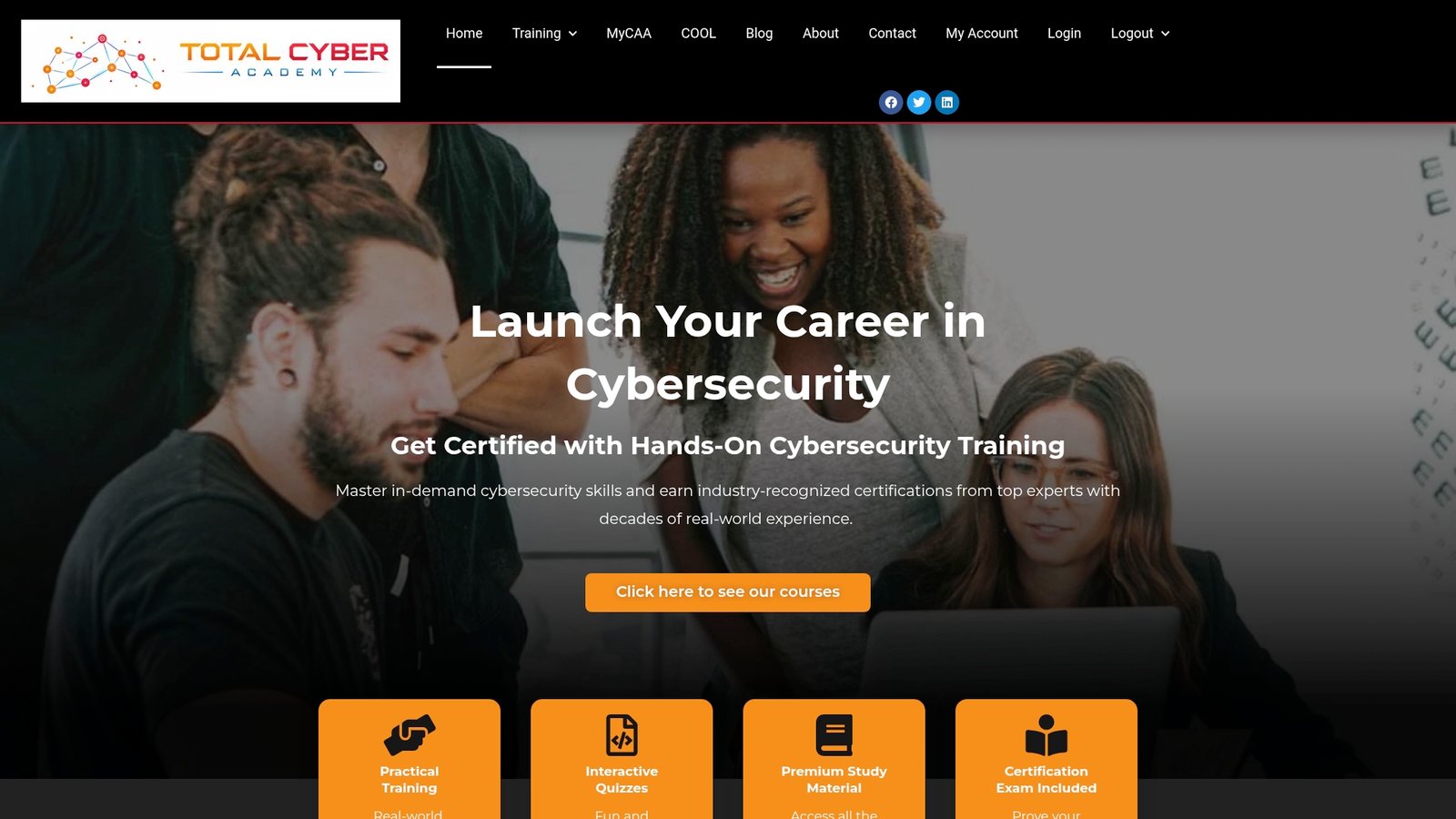
For U.S. learners pursuing cybersecurity and IT careers, Totalcyber maps directly to every stage of the roadmap above. As a veteran-owned training organization, Totalcyber offers instructor-led and on-demand programs that combine hands-on labs, certification preparation (CompTIA, EC-Council, ISC2), and live mentoring — the combination that produces the strongest employer signal.
Three program areas worth reviewing:
- Cybersecurity career starter guide: Maps training options to specific career paths — the right starting point if you are still deciding which certification to pursue first.
- Hands-on cybersecurity training: Explains exactly what lab-based training looks like and what to expect from a structured program.
- Practical cybersecurity experience guide: Focused on building the documented experience that makes a resume competitive for entry-level roles.
Veterans receive dedicated support throughout the program. To see available courses and formats, visit the Totalcyber course catalog and identify the program that aligns with your target certification and timeline.
Sources
- Virtual Skills & Workforce Trainer
- SkillSeal — Verify Skills & Hire Verified Talent
- VirtualSpeech – AI-Powered Soft Skills Training in VR and Online
- AI Training Platform for Soft Skills & Sales Teams | Metaskills
- Google Skills
- TXSG SkillSets Training – Texas Military Department
- Why Simulation Is the Future of Professional Learning
- SKILL SET Definition & Meaning
Recommended
- Cloud Security Skills for Beginners: A Career Starter Guide – Total Cyber Academy!
- Resume Building for Cybersecurity: A 2026 Career Guide – Total Cyber Academy!
- Practical Cybersecurity Experience: A Career Starter Guide – Total Cyber Academy!
- Cybersecurity Specialization Choosing Guide for 2026 – Total Cyber Academy!