
For U.S. enterprise and government teams, a managed, MITRE ATT&CK-aligned cloud cyber range with OT/ICS scenario capability is the strongest choice available today. The reasoning is straightforward: boardroom-level analysis from Secureworks confirms that simulation and exercises have become a measurable readiness priority at the executive level, which means your platform selection now carries direct accountability to leadership. The best virtual cyber ranges combine realistic attack emulation, structured scoring, and repeatable exercises that produce defensible metrics.
Here is the shortlist for buyers who need a decision now:
- Enterprise SaaS ranges (e.g., Cloud Range, Cyberbit): Best for SOC upskilling and purple-team exercises at scale, with managed scenario delivery and MITRE alignment.
- Defense/NATO-grade ranges (e.g., CybExer Technologies, CYBER RANGES): Best for national defense exercises, ministerial-level drills, and large-scale government cyber competitions.
- Transportable/hybrid ranges (e.g., Aries Security, Airbus CyberRange): Best for organizations that need on-site exercises at command centers or classified environments.
- Open-source/academic ranges (e.g., KYPO, CYRIN): Best for universities, research labs, and budget-constrained teams that can absorb installation complexity.
- Total Cyber Academy (integrated training partner): Best for organizations that need structured, instructor-led certification prep and hands-on lab curricula to run alongside any cyber range platform.
- Field Effect / Security Innovation: Best for mid-market teams and software security testing that need scenario depth without enterprise-scale pricing.
Key Takeaways
The strongest cyber range strategy for U.S. organizations combines a MITRE ATT&CK-aligned platform with structured instructor-led training to produce measurable, defensible readiness outcomes.
| Point | Details |
|---|---|
| Match platform to mission | Enterprise SaaS ranges suit continuous SOC programs; defense/NATO-grade ranges serve government and national-scale exercises. |
| Require live pilot exercises | Demos do not validate scenario realism or scoring reliability; a live-fire pilot before contract signature is the minimum standard. |
| Capture baseline metrics first | Readiness data collected before exercises is the only way to prove improvement to leadership after them. |
| OT/ICS coverage is non-negotiable | Organizations operating industrial or critical infrastructure must verify OT protocol simulation before selecting any platform. |
| Totalcyber as training partner | Total Cyber Academy’s certification-aligned curricula and instructor-led labs integrate with any range platform to accelerate skill development. |
Table of Contents
- How do the best cyber ranges compare across key dimensions?
- What does each cyber range category actually do best?
- How do you choose the right cyber range for your organization?
- When should you use each deployment model?
- What is the clearest final recommendation for U.S. buyers?
- Why hands-on ranges matter more than most buyers realize
- Total Cyber Academy pairs directly with your cyber range strategy
- Sources
How do the best cyber ranges compare across key dimensions?
Selecting among cybersecurity simulation platforms requires comparing more than marketing claims. The ECSO features checklist documents that even experienced buyers find it difficult to evaluate providers consistently without a structured framework. The table below maps category-level offerings against the dimensions that matter most to U.S. procurement teams.
| Category | Best for | Delivery model | Scenario library & OT/ICS | Customization & integration | Assessment & scoring | Scalability | Support services | Pricing model | U.S. availability |
|---|---|---|---|---|---|---|---|---|---|
| Enterprise SaaS ranges | SOC upskilling, purple team | SaaS / managed | Large library; OT/ICS available | API integrations, SIEM/SOAR connectors | MITRE-aligned, automated scoring | High | Managed exercises, scenario creation | Subscription / seat-based | Strong; FedRAMP candidates |
| Defense/NATO-grade ranges | National defense, government exercises | On-prem / hybrid | Large; OT/ICS, red-team content | Digital twin, asset libraries | Orchestrated scoring, after-action reports | Very high (national scale) | Scenario creation, train-the-trainer | CAPEX + recurring maintenance | Available via government channels |
| Transportable/hybrid ranges | Command center exercises, classified sites | Transportable / on-prem | Moderate; OT/ICS scenarios | Custom asset libraries | Manual + automated scoring | Moderate concurrency levels | On-site facilitation | Per-exercise / CAPEX | Direct U.S. sales |
| Open-source/academic ranges | Universities, research, budget teams | Self-hosted (OpenStack) | Moderate; extensible | Full source access | Basic scoring; extensible | Low to moderate | Community support | Free / infrastructure cost | Global; self-install |
| Total Cyber Academy | Certification prep, hands-on lab training | Online / instructor-led | Curated lab scenarios; cert-aligned | Integrates with any range platform | Exam-aligned assessments, quizzes | Individual to team cohorts | Instructor-led, mentoring, veteran support | Per course / program bundle | U.S.-based; veteran-owned |
Legend: “MITRE-aligned” means scenarios map to MITRE ATT&CK tactics and techniques. “OT/ICS” indicates operational technology and industrial control system scenario capability. Starred recommendations by buyer persona:
- Small SOC: Open-source/academic ranges or Total Cyber Academy labs for cost-effective skill building.
- Large enterprise: Enterprise SaaS ranges for managed delivery, scale, and MITRE-aligned reporting.
- Government/defense: Defense/NATO-grade ranges for orchestration, classification controls, and national-scale exercises.
What does each cyber range category actually do best?
Enterprise SaaS ranges: Cloud Range, Cyberbit
Enterprise SaaS platforms deliver managed, browser-accessible cybersecurity training environments with minimal infrastructure burden on the buyer. Cloud Range, for example, emphasizes AI validation alongside live-fire attack simulations across IT, OT, and cloud environments, with MITRE ATT&CK alignment built into scenario scoring. Cyberbit operates a similar model, offering a large scenario library and multi-subnet virtual network architecture that scales to hundreds of concurrent users.
Typical customers in this category include Fortune 500 SOC teams running quarterly purple-team exercises and critical infrastructure operators who need OT/ICS scenario coverage without standing up dedicated hardware. U.S. access is direct via SaaS subscription, and several platforms in this category are pursuing or have achieved FedRAMP authorization.
Defense/NATO-grade ranges: CybExer Technologies, CYBER RANGES
CybExer Technologies has documented NATO-awarded engagements and ministerial-level defense exercise usage, with orchestration, automation, and visualization components designed for large-scale national exercises. CYBER RANGES targets a similar audience, emphasizing multi-organization drills and government cyber competition hosting.
These platforms are typically deployed on-premises or in government-controlled hybrid environments. U.S. government teams access them through direct procurement or established defense contracting channels. The scenario libraries in this category tend to include red-team content and large target libraries built for realistic adversary emulation.
Transportable/hybrid ranges: Aries Security, Airbus CyberRange
Aries Security specializes in portable cyber range hardware that can be deployed at command centers, field exercises, or classified facilities where cloud connectivity is restricted. Airbus CyberRange operates on VMware and Docker-based infrastructure, supporting multi-role simulation across IT and OT environments for large industrial organizations.
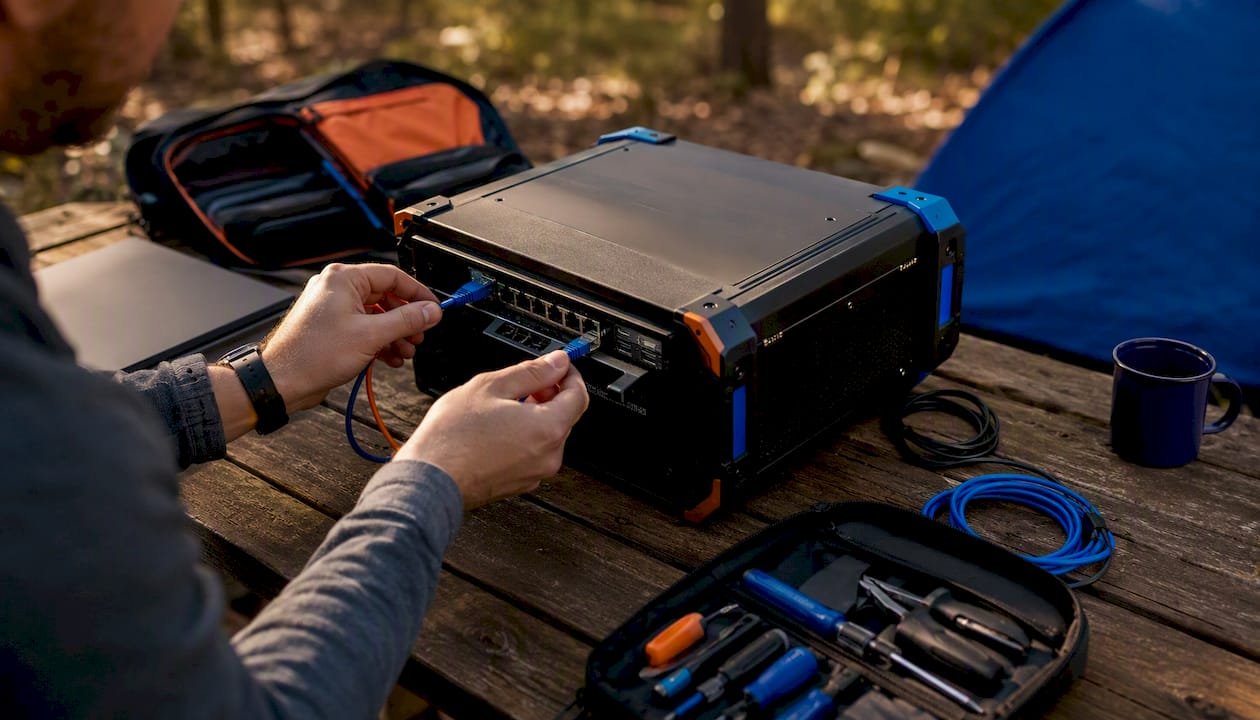
Both categories serve organizations that cannot route sensitive exercise traffic through commercial cloud infrastructure. Pricing is typically per-exercise or CAPEX-based, with recurring maintenance fees. U.S. buyers can engage Aries Security directly; Airbus CyberRange is accessible through Airbus CyberSecurity’s U.S. presence.
Open-source/academic ranges: KYPO, CYRIN
The KYPO Cyber Range platform is an open-source option focused on education and lowering cost barriers for hands-on training. Installing KYPO requires an OpenStack environment and an OpenID Connect provider, which means it suits universities and research institutions with existing infrastructure rather than lean enterprise security teams. CYRIN (Cyber Range in a Box) targets a similar academic audience, offering pre-built lab scenarios aligned to common certification objectives.
The trade-off is support: both platforms rely on community resources and internal expertise rather than managed service delivery. For teams that can absorb that overhead, the cost profile is compelling.
Total Cyber Academy: integrated training partner
Total Cyber Academy fills a gap that pure cyber range platforms leave open. A range provides the environment; structured curricula, expert instruction, and certification-aligned assessment are what convert exercise hours into measurable skill gains. Totalcyber’s hands-on cybersecurity training programs are designed to run alongside any range platform, providing the instructional scaffolding that turns simulated attacks into retained competencies.
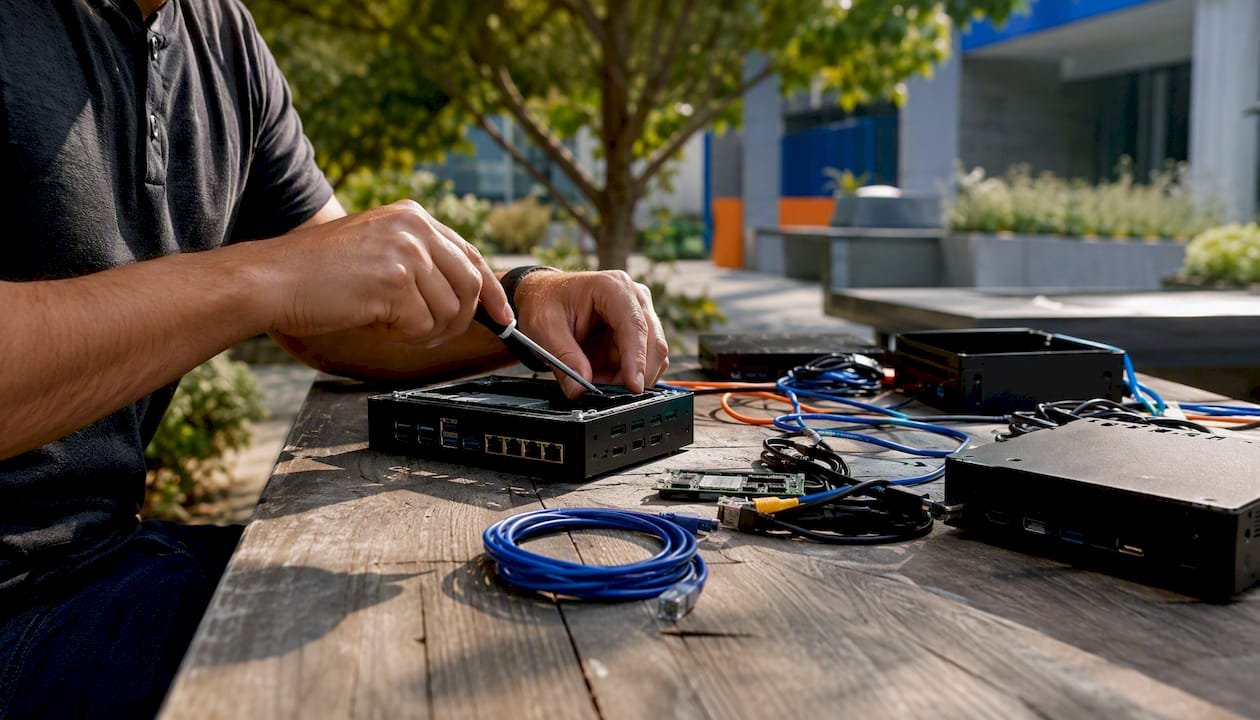
Pro Tip: Before selecting a range platform, map your team’s current skill gaps against CompTIA Security+, CySA+, or EC-Council CEH objectives. Organizations that align range exercises to certification frameworks report faster measurable progress and cleaner post-exercise reporting.
How do you choose the right cyber range for your organization?
Six evaluation criteria to prioritize
- Readiness metrics and baseline measurement: The platform must produce pre- and post-exercise scores that leadership can interpret. Vague “completion rates” are not readiness metrics.
- Scenario realism and OT/ICS capability: If your organization operates industrial control systems, power grids, or manufacturing infrastructure, OT/ICS scenario coverage is non-negotiable.
- Integration with existing security tools: The range should connect to your SIEM, SOAR, EDR, and ticketing systems via documented APIs or log forwarding. Isolated platforms that produce no telemetry outside the range environment limit operational value.
- Analytics and assessment depth: Look for MITRE ATT&CK-mapped scoring, individual and team performance tracking, and exportable reports for compliance documentation.
- SLA, support, and managed services: Understand whether scenario creation, exercise facilitation, and after-action reporting are included or billed separately.
- Scalability and concurrency: Confirm the platform’s concurrent user ceiling and whether it degrades under load. Ask for reference customers at your target scale.
Questions to ask vendors during demos and RFPs
Technical:
- How are scenarios scored, and which MITRE ATT&CK techniques are covered?
- How does the platform integrate with our SIEM and SOAR tools?
- What data residency and classification controls exist for U.S. government workloads?
- Can we import custom network topologies or digital twin configurations?
Procurement:
- What is the minimum contract term, and what are the exit provisions?
- Is pricing per seat, per exercise, or subscription-based, and what triggers overage fees?
- What is the typical time from contract signature to first live exercise?
Training and support:
- Do you provide scenario creation services, or does our team build scenarios internally?
- Is train-the-trainer support available, and at what cost?
- What does a managed exercise engagement include?
Pricing models explained
Subscription and seat-based pricing suits enterprise teams running continuous training programs. Per-exercise pricing works for government agencies that run annual or semi-annual drills without a standing training program. CAPEX-based on-premises deployment carries higher upfront cost but eliminates recurring per-user fees, which can favor large defense organizations over a five-year horizon. Always confirm whether scenario library access, managed exercise hours, and analytics dashboards are included or add-on costs.
A realistic procurement and deployment timeline looks like this:
- Weeks 1–4: Requirements gathering, RFP drafting, vendor shortlisting.
- Weeks 5–8: Vendor demos, POC or pilot exercise, reference checks.
- Weeks 9–12: Contract negotiation, legal review, data controls verification.
- Weeks 13–16: Platform onboarding, scenario configuration, user provisioning.
- Week 17+: First live exercise, baseline metrics capture, 30/60/90-day reassessment cycle.
Pro Tip: Require a live pilot exercise, not just a demo, before signing. A vendor who cannot run a 90-minute live-fire scenario with your team’s actual tools during evaluation is unlikely to deliver operational value post-contract.
Red flags to watch for
- No quantitative readiness metrics or MITRE-aligned scoring.
- No documented OT/ICS scenario examples when your environment includes operational technology.
- Unclear data residency or classification controls for sensitive government workloads.
- Single-vendor lock-in with no API access or data export capability.
- Vague SLA language with no defined response times or exercise facilitation commitments.
When should you use each deployment model?
The right deployment model depends on your threat profile, data sensitivity, and operational tempo, not just your budget.
| Use case | Recommended deployment | Organization size | Notes |
|---|---|---|---|
| SOC analyst upskilling | SaaS / managed | Small to enterprise | Fastest time-to-exercise; minimal infrastructure |
| Incident response live-fire | SaaS or hybrid | Mid-market to enterprise | Requires SIEM/SOAR integration for realism |
| OT/ICS resilience exercises | On-prem or hybrid | Enterprise / critical infra | Needs OT protocol simulation (Modbus, DNP3) |
| Purple-team / red-team drills | SaaS or on-prem | Enterprise | Red-team content library depth is critical |
| Certification lab practice | SaaS or academic | Individual to small team | Align to CompTIA, EC-Council, ISC2 objectives |
| National cyber competitions / CTFs | Defense/NATO-grade | Government | Requires orchestration and multi-org support |
SaaS: Fastest deployment, lowest infrastructure burden, strong for continuous training programs. The trade-off is that sensitive exercise data traverses commercial infrastructure, which limits use for classified workloads.
On-premises: Full data control and classification compliance. Higher upfront cost and internal maintenance burden. Suited for defense agencies and critical infrastructure operators.
Transportable: Purpose-built for field exercises and command center drills where cloud connectivity is unavailable. Moderate scenario library depth; scenario customization often requires vendor support.
Hybrid: Combines cloud-hosted scenario delivery with on-premises data controls. Preferred by large enterprises that need both scale and data sovereignty.
For organizations building a cyber workforce development strategy, integrating range exercises with structured curricula accelerates skill retention. Typical integration methods include API-based log forwarding to SIEM platforms, agentless connectors for EDR telemetry, and IAM federation via SAML or OIDC for single sign-on across training and range environments. Pairing range exercises with cybersecurity awareness programs reinforces the behavioral changes that technical drills alone rarely produce.
How these providers were selected
The shortlist reflects six primary filters applied consistently across all candidates:
- Enterprise and government relevance: Documented use by SOC teams, critical infrastructure operators, or government agencies.
- OT/ICS capability: Verified scenario coverage for operational technology environments.
- MITRE ATT&CK alignment: Scenario mapping to MITRE tactics and techniques, with structured scoring.
- Scenario realism: Evidence of live-fire attack simulation, not just tabletop or quiz-based exercises.
- Assessment and metrics: Quantitative readiness reporting exportable for compliance or leadership review.
- U.S. availability and support: Direct U.S. sales presence, FedRAMP candidacy, or established government contracting channels.
Primary sources consulted include the ECSO features checklist and European provider catalog, the Cybersecurity Ventures hot-list roundup, Secureworks’ boardroom readiness analysis, vendor product documentation, and public case study materials. Market roundups signal vendor momentum but do not substitute for POC validation. Buyers should treat this shortlist as a starting framework and validate scenario realism and scoring through a live pilot before committing.
This article is authored by Alden, affiliated with Total Cyber Academy, a veteran-owned U.S. cybersecurity training organization. Vendor claims in public documentation vary in specificity; all buyers should conduct independent POC exercises to verify platform capabilities against their specific environment.
What is the clearest final recommendation for U.S. buyers?
For most U.S. enterprise and government teams, a managed enterprise SaaS range with MITRE ATT&CK-aligned scoring and documented OT/ICS capability is the right starting point. It delivers the fastest time-to-exercise, the strongest analytics for leadership reporting, and the most direct path to measurable readiness improvement.
By buyer persona:
- Small SOC (under 20 analysts): Start with an open-source or academic range for cost-effective lab practice, paired with Total Cyber Academy’s certification-aligned curricula to build structured competency before investing in a managed platform.
- Enterprise SOC (20+ analysts, continuous program): Enterprise SaaS ranges with managed exercise delivery and SIEM/SOAR integration. Require MITRE-aligned scoring and a documented OT/ICS scenario library.
- Government/defense: Defense/NATO-grade on-premises or hybrid ranges with orchestration, classification controls, and after-action reporting for ministerial review.
Immediate next steps:
- Capture baseline readiness metrics for your team before any platform engagement.
- Require MITRE ATT&CK-mapped scenarios in your RFP and confirm OT/ICS coverage if applicable.
- Run a live pilot exercise (not a demo) before contract signature.
- Schedule a 30/60/90-day reassessment cycle post-exercise to measure skill progression.
Why hands-on ranges matter more than most buyers realize
The gap between a team that has completed a cyber range exercise and one that has only read incident response playbooks is not subtle. Analysts who have worked through a live-fire ransomware scenario under time pressure respond differently during actual incidents. They make faster triage decisions, communicate more precisely under stress, and escalate with better-structured information. That behavioral difference is what ranges produce, and it is what tabletop exercises alone cannot replicate.
Four practical tips from working with training cohorts:
- Focus exercises on detection gaps, not just response. Most teams over-train on containment and under-train on the detection phase where real incidents are won or lost.
- Automate scoring from day one. Manual after-action reviews introduce bias and delay. Platforms that score automatically against MITRE techniques produce cleaner data for leadership.
- Keep exercises repeatable. A scenario run once produces a data point. The same scenario run quarterly produces a trend line that shows whether training is working.
- Blend tabletop with live-fire. Tabletop exercises build communication and decision-making skills; live-fire exercises build technical muscle memory. Neither alone is sufficient.
Pro Tip: During a POC, ask the vendor to run the same scenario twice with different team compositions. If scoring results are inconsistent across runs with equivalent skill levels, the platform’s assessment engine is not reliable enough for procurement decisions.
Total Cyber Academy pairs directly with your cyber range strategy
Cyber range platforms provide the environment. What they rarely provide is the structured instructional design, expert facilitation, and certification-aligned assessment that convert exercise hours into career-ready skills. That is precisely where Totalcyber fits.
Total Cyber Academy is a veteran-owned U.S. training organization built for cybersecurity professionals who need more than a lab environment. The programs combine instructor-led and on-demand delivery, hands-on lab curricula aligned to CompTIA, EC-Council, and ISC2 certification objectives, live mentoring, and dedicated veteran support. Whether your team is preparing analysts for their first SOC role or upskilling experienced engineers for advanced penetration testing, Totalcyber’s training prerequisites checklist helps you assess readiness before any range engagement begins. The result is a training pipeline that feeds directly into range exercises with analysts who are prepared to perform, not just participate. Review the full course catalog and enroll your team today.
Sources
- 10 Hot Cyber Range Companies To Watch In 2025 (Cybersecurity Ventures)
- Boardroom cybersecurity report 2024 (Secureworks)
- KYPO Cyber Range platform (CONCORDIA H2020/KYPO)
Recommended
- Top 6 DSDT.com Alternatives for Cybersecurity Training 2026 – Total Cyber Academy!
- Cybersecurity Workforce Veteran Initiatives: 2026 Guide – Total Cyber Academy!
- Cyber Workforce Development: What It Means in 2026 – Total Cyber Academy!
- Top 5 CEDSolutions.com Alternatives in 2026 – Total Cyber Academy!