
Comparing cybersecurity training options that deliver recognized certification and real-world job skills is time-consuming and costly for aspiring professionals and military veterans. Many programs either lack hands-on training directly mapped to job scenarios, restrict access by eligibility, or do not clearly publish costs and curriculum. This comparison covers included exams, instructor backgrounds, career support, and eligibility so readers can select the cybersecurity training provider that fits career backgrounds, funding needs, and specific job placement goals without guesswork.
Table of Contents
Total Cyber Academy
At a Glance
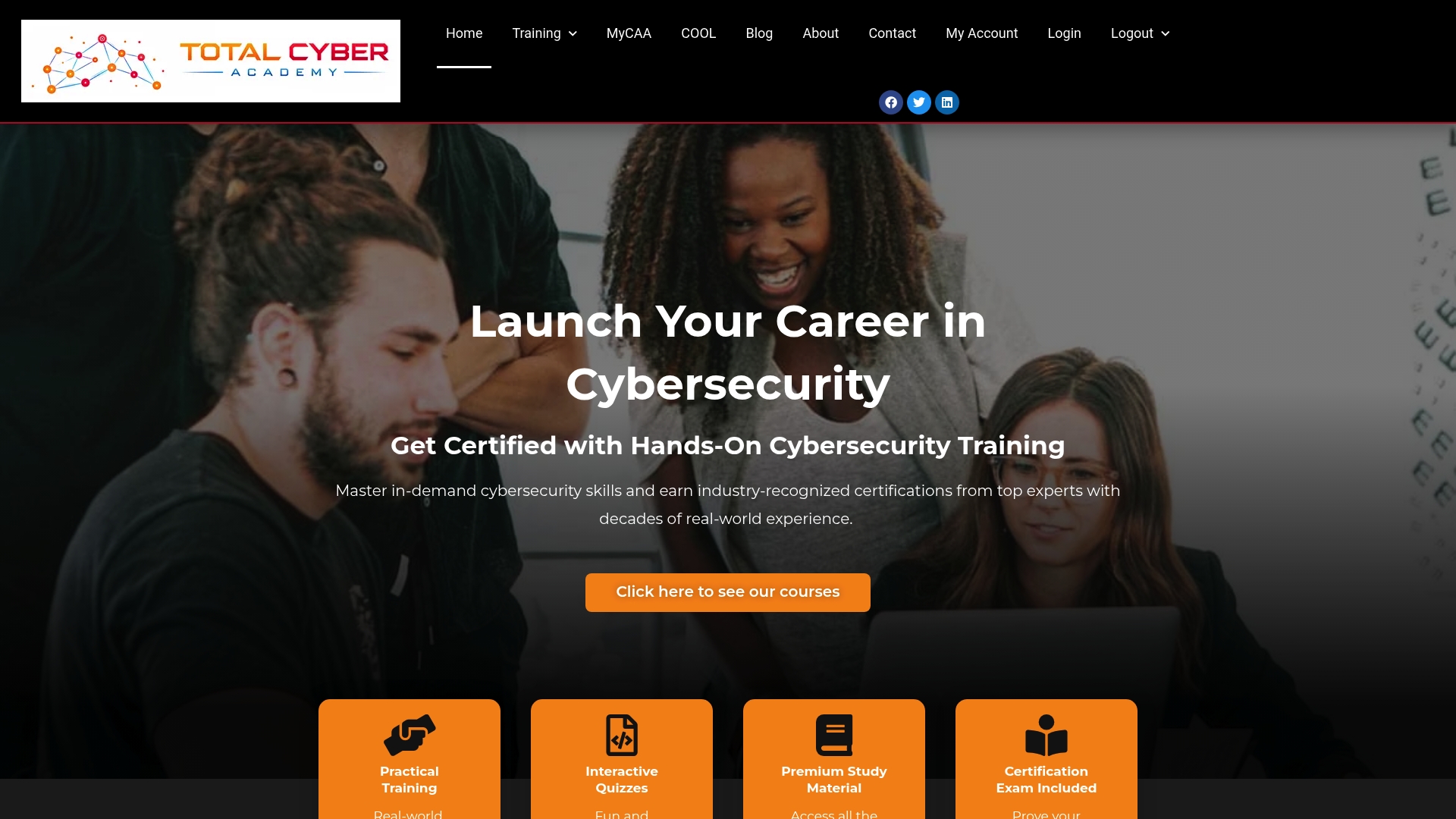
Total Cyber Academy reports a 95% pass rate for certification exams. The organization is veteran owned and uses instructors from military, federal, and private sectors. Courses pair live instructor led sessions with on demand content and include the certification exam.
Core Features
Hands on cybersecurity training is delivered by active professionals who focus on real tasks and job skills. Courses include industry recognized certifications, interactive quizzes, premium study material, and live instructor assistance with Q and A sessions. Multiple career tracks cover penetration testing, cloud security, and IT operations, and funding or scholarship options are available for some students.
Key Differentiator
Instructors with extensive military, government, and private sector experience teach applied skills tied to real operations. That emphasis on real world tasks shapes lab scenarios and exam practice toward environments used by employers and government agencies. Course labs reproduce practical workflows rather than abstract exercises.
Pros
The vendor reports strong certification outcomes, and that pass rate suggests close alignment between course content and exam objectives. Instructors with military and federal backgrounds deliver targeted guidance for candidates pursuing government or cleared roles. Flexible learning options let you choose live instructor led cohorts or on demand modules to match schedule constraints. Available funding and scholarship options reduce the net cost for qualifying students.
Cons
- Cost may be prohibitive for some individuals or organizations, especially when selecting live formats that include instructor time and exam access.
Who It’s For
Aspiring cybersecurity professionals and IT specialists seeking certification focused training will get the most value. Military and government personnel will find instructor experience and scenario work relevant to their credentialing needs. Organizations that need employee upskilling can enroll cohorts on specific career paths.
Unique Value Proposition
Courses include the certification exam, which removes separate scheduling and a common extra expense. Bundling exam access with live instruction and hands on labs lets you practice against the same objectives that appear on the test. For career changers, that consolidation shortens the path from training to a verified credential employers can validate quickly.
Real World Use Case
A candidate with IT support experience completes the Security+ course, attends live sessions, and completes hands on lab exercises. They use the included exam access and pass certification, then list the credential on their resume. That sequence helped them secure an entry level cybersecurity analyst role at a government agency.
Pricing
Pricing varies from approximately $1,999.99 to $3,499.99 depending on the course and format. Live instructor led courses tend toward the higher end of that range. Funding and scholarship options can lower the effective cost for eligible students.
Website: https://training.totalcyber.com
cybervets.org
At a Glance
A peer led mentorship model combined with industry partnerships drives job placement for veterans. Cybervets.org operates as a nonprofit focused on moving service members into civilian cybersecurity roles. The group emphasizes practical training, mentor networks, and employer connections.
Core Features
Members access veteran focused training programs and a peer led mentorship approach that addresses common transition challenges and civilian hiring norms. The community pairs training with job placement assistance and partnerships with industry employers to create hiring pathways. Program outlines, schedules, and certification details are not fully published on the public site.
Key Differentiator
The primary differentiator is the peer led model tailored specifically to veterans. Mentors come from military backgrounds and translate service experience into workplace habits employers recognize. Industry partnerships aim to convert training participation into interviews and hiring opportunities.
Pros
Strong veteran focus and peer led instruction build trust and make technical material more relatable to service backgrounds. Partnerships with employers increase the chance that members meet hiring criteria and receive interview referrals. Programs welcome varied military experiences and emphasize practical transition support alongside technical skill building.
Cons
- Website lacks detailed information on specific training offerings and program structure.
- Limited publicly available details on curriculum, certification, or training duration.
- No publicly accessible information on costs or funding for training programs.
When It May Not Fit
This community platform may not fit veterans who need transparent curriculum outlines or clear timelines for completion. Employers or training sponsors who require published accreditation or certification roadmaps will find the site lacking. Budget minded candidates seeking posted costs should contact the organization directly.
Who It’s For
Military veterans interested in starting or advancing cybersecurity careers form the core audience. Active service members preparing for civilian transition will find mentors who understand rank, roles, and operational experience. Nonprofit partners and employers seeking to recruit veteran talent can use the network to identify candidates.
Real World Use Case
A veteran completes a training cohort, receives mentor review on resume and interview skills, and gets referred to partner employers. That referral leads to multiple interviews and an entry level cybersecurity role within the employer network. The community continues mentoring during the onboarding period to close remaining skill gaps.
Website: https://cybervets.org
SANS Cyber Academy
At a Glance
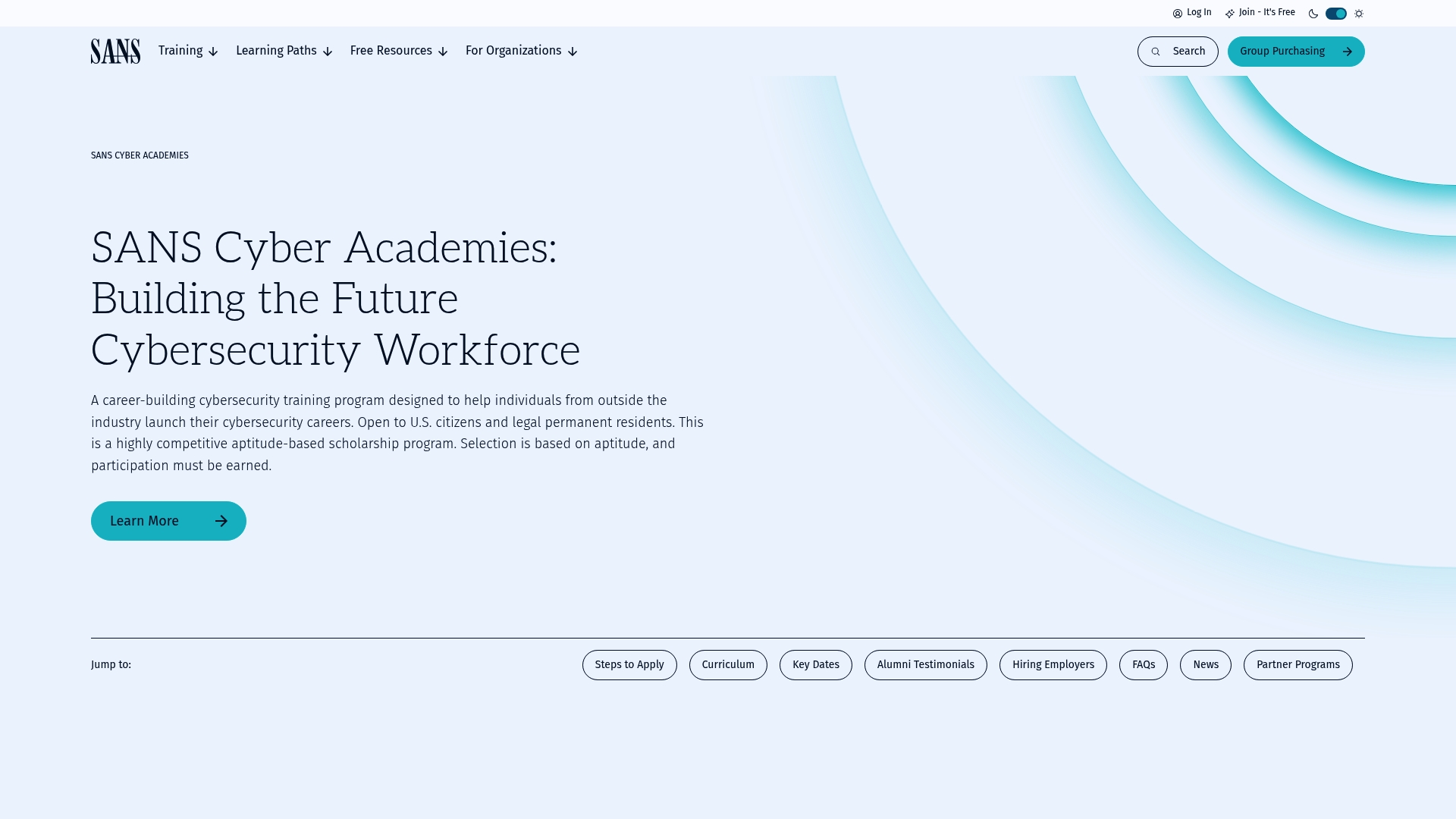
SANS Cyber Academy reports an 87% job placement rate within 12 months. The vendor advertises a program length of about nine months delivered as three courses. The program targets U.S. citizens and permanent residents who want a career transition into cybersecurity.
Core Features
The offering uses aptitude based, scholarship selection and delivers self paced, on demand courses with certification exams and hands on labs. According to the company, each course requires approximately 150 hours over three months. The curriculum maps to GIAC certifications and emphasizes applied exercises tied to employer needs.
Key Differentiator
The program pairs aptitude based scholarships with industry recognized certification paths and direct employer collaboration. That combination narrows access but creates a focused pipeline from training to hiring. It specifically serves U.S. citizens and permanent residents seeking an entry level career change.
Pros
That placement figure supports the program’s effectiveness for entry level job seekers. Strong employer partnerships increase the likelihood of interviews and employer-relevant lab scenarios. The curriculum emphasizes practical skill development through hands on labs and GIAC exam preparation. Scholarship funding removes tuition barriers for admitted candidates.
Cons
- Highly competitive selection process limits seats and rejects many applicants.
- The stated time commitment is significant; the program expects roughly 150 hours per course over three months.
- Eligibility is restricted to U.S. citizens and permanent residents, excluding international applicants.
- Focus on entry level learners may not meet the needs of experienced cybersecurity professionals.
When It May Not Fit
Organizations that need to train international hires will find eligibility rules a hard stop. Applicants who cannot commit to the stated time frame should look elsewhere. Experienced professionals seeking advanced or niche specialties will likely outgrow this entry level curriculum.
Who It’s For
Aspiring cybersecurity professionals in the U.S. who can commit time to a multi course program and want certification-backed credentials. Military transitioners and career changers with limited prior experience will benefit most. Employers hiring entry level talent for analyst roles will value the training-to-hire pipeline.
Real World Use Case
A military veteran applies for a scholarship, completes the self paced courses, and prepares for GIAC certification exams. The veteran uses hands on lab work to build a portfolio of detection and response tasks. Employer partnerships lead to interviews and a successful hire as a cybersecurity analyst.
Website: https://sans.org/cyber-academy
Comparison of alternatives
Professionals seeking cybersecurity training face a variety of options, each offering unique strengths for specific career goals. Evaluating the offerings from Total Cyber Academy, SANS Cyber Academy, and cybervets.org highlights key distinctions in areas of instruction quality, community support, and financial accessibility.
Strengths in instructional focus
Total Cyber Academy emphasizes, hands-on training alongside certification preparation, directly leading participants toward immediate professional placement. By integrating real-world application with live or on-demand training options, it stands out for its tailored learning paths. SANS Cyber Academy, on the other hand, offers a structured multistaged approach to certification via aptitude-based scholarships, which is particularly effective for U.S.-based professionals transitioning into cybersecurity.
Veteran-centered approaches
Cybervets.org offers a mentorship model uniquely catered to veterans transitioning into civilian cybersecurity careers. With its focus on community, peer engagement, and an extensive employer network, this program facilitates smooth skill application and matching veterans to appropriate roles in the workforce. For individuals fitting this demographic, the localized expertise and support may provide resources.
Best fit
- Those desiring hands-on training that includes courses designed for real-world applications alongside certification advantages should consider Total Cyber Academy.
- Veterans transitioning to the civilian cybersecurity workforce may find Cybervets.org’s community-driven, mentorship-focused programs strategically beneficial.
- Aspiring cybersecurity professionals with a U.S. residency, seeking cost-effective instruction paired with recognized credentials, could gain significantly from SANS Cyber Academy’s scholarship opportunities.
Our pick
Total Cyber Academy is a prime choice for cybersecurity professionals looking for instruction by experienced practitioners. Its courses include hands-on labs and immediate certification exam access, making it ideal for those prioritizing a clear, direct pathway to industry-recognized credentials. However, veterans seeking a network-based transition or cost-sensitive learners emphasizing scholarships might explore alternative options.
To select the cybersecurity training program that best aligns with your needs, consider the emphasized features, instructor credentials, and program structures detailed below:
| Training Provider | Core Features | Key Differentiator | Best For | Pricing | Notable Limitation |
|---|---|---|---|---|---|
| Totalcyber | Live instructor-led and on-demand courses, certification exam included | Real-world tasks by military/private experts | Aspiring cybersecurity professionals and IT specialists | $1,999.99–$3,499.99 | Higher cost for complete programs with live instruction |
| cybervets.org | Veteran-focused training and peer-led mentorship | Tailored peer-guided mentorship for veterans | Military veterans transitioning to cybersecurity | Price not published | Insufficient public information on curriculum and program structure |
| SANS Cyber Academy | Self-paced online courses, GIAC-aligned certifications, hands-on labs | Employer partnerships for a direct hire pipeline | U.S. citizens aiming for entry-level cybersecurity careers | Price not published | Limited seats and restricted eligibility to U.S. citizens and permanent residents |
Challenges With dodtc.com Alternatives in Cybersecurity Training
Aspiring cybersecurity professionals, veterans, and IT specialists often face difficulty finding training that aligns closely with industry certifications and real-world skills. Many alternatives to dodtc.com lack tailored instruction from instructors with military and federal experience or the inclusion of certification exams within the course. This gap can slow career progression and job placement for those transitioning into cybersecurity.
Totalcyber meets these challenges by delivering veteran-owned, career-focused training that includes live instruction, hands-on labs, and certification exam access in one package. The alignment between course content and industry certifications ensures practical skill building and job readiness.
Visit Totalcyber to review programs designed to connect training directly with employment outcomes. Take the next step toward joining the cybersecurity workforce with Totalcyber’s expert instruction and real-world scenarios.
Learn more about Total Cyber Academy
FAQ
What is the pass rate for Total Cyber Academy?
Total Cyber Academy reports a 95% pass rate for certification exams. This rate indicates a close alignment between course content and exam objectives, suggesting effective preparation for students. Aspiring cybersecurity professionals can expect a high likelihood of passing their certification exams through this program.
How does Cybervets.org support veterans in cybersecurity training compared to Total Cyber Academy?
Cybervets.org emphasizes a peer-led mentorship model combined with industry partnerships, enhancing job placement for veterans. This model specifically addresses the transition challenges veterans face when moving to civilian roles. Total Cyber Academy provides a structured learning environment with live instructor-led sessions that focus on certification, which may appeal more to those seeking immediate skills for specific job roles.
What unique features does SANS Cyber Academy offer that differ from Total Cyber Academy?
SANS Cyber Academy offers a scholarship selection process that matches aptitude with industry-recognized certification paths. This approach focuses on creating a direct pipeline from training to hiring. In contrast, Total Cyber Academy provides immediate preparation for certification with live courses and exam access, making it suitable for those ready to pursue a certification quickly.
Why might a student find Cybervets.org lacking compared to Total Cyber Academy?
Cybervets.org lacks detailed information on specific training offerings and published costs, making it harder to evaluate programs upfront. In contrast, Total Cyber Academy clearly outlines its courses, pass rates, and associated costs, offering greater transparency for potential students.
What are the pricing options for Total Cyber Academy?
Total Cyber Academy pricing varies from approximately $1,999.99 to $3,499.99, depending on the course and format selected. The availability of funding and scholarship options allows eligible students to lower their effective costs, making it a potentially accessible choice for many.