
Workforce certification funding is financial aid designed to help individuals pay for short-term training programs that lead to workforce-recognized credentials. The term is commonly used to describe what the industry formally calls workforce development grants and training support programs, administered through federal agencies, state workforce boards, and private foundations. Programs like the Workforce Pell Grant and the Workforce Innovation and Opportunity Act (WIOA) represent the largest federal funding sources for certification seekers. Understanding what is workforce certification funding, who qualifies, and how to apply can mean the difference between paying out of pocket and earning a credential at little or no cost. The funding sources available span grants, loans, employer reimbursement, and private scholarships, each with distinct rules and eligibility thresholds.
What is workforce certification funding and who qualifies?
Workforce certification funding covers the costs of short-term training programs that align with in-demand occupations. It is not a single program. It is a category of financial support drawn from federal, state, employer, and private sources, all targeting the same goal: getting workers into high-skill jobs faster. The primary distinction from traditional college aid is the focus on credential programs rather than degree pathways.
Federal eligibility generally requires U.S. citizenship or eligible noncitizen status, a high school diploma or GED, and demonstrated financial need for grant-based programs. State programs add their own criteria, often prioritizing unemployed workers, veterans, or individuals in specific industries. Employer-based programs typically require active employment and a minimum tenure with the company.

The benefits of industry-recognized certifications are well documented in IT and cybersecurity fields, where credential holders consistently earn higher starting salaries than non-certified peers. That earning potential is precisely why federal and state agencies direct workforce investment funding toward these programs.
What are the primary types of workforce certification funding available?
Certification funding programs fall into five main categories. Each serves a different population and carries different application requirements.
- Federal grants: The Workforce Pell Grant and WIOA Title I funding are the two largest federal sources. Pell Grants do not require repayment. WIOA funds flow through state and local workforce development boards to eligible training providers.
- State and local workforce grants: Many states operate their own grant programs, often funded through a mix of federal block grants and state appropriations. These programs frequently partner with community colleges and technical schools.
- Federal student loans: Direct Loans are available for certificate programs, but enrollment requirements apply. Students must be enrolled at least half-time, typically 6 credit hours or 12 clock hours per week, and the program must meet Title IV eligibility standards.
- Employer tuition reimbursement: Many employers cover certification costs fully or partially. The Department of Labor’s Industry-Driven Skills Training Fund reimburses 50–80% of training costs through state agencies partnering with employers, contingent on outcomes like skill attainment.
- Private scholarships and foundation grants: Professional associations, nonprofit foundations, and industry groups offer scholarships specifically for certification programs. These are frequently overlooked but can fully fund credentials outside the federal aid system.
Pro Tip: Apply for employer reimbursement before exploring loans. Employer funding does not reduce your federal aid eligibility, so combining both sources can cover total program costs.
How does the Workforce Pell Grant program work for short-term training?
The Workforce Pell Grant is the most significant expansion of federal certification funding in decades. Starting July 1, 2026, the program extends Pell Grant eligibility to short-term training programs ranging from 150 to 599 clock hours and 8 to 14 weeks in length. This policy shift creates a debt-free education pathway for workers who previously had no access to federal grant aid for short-term credentials.
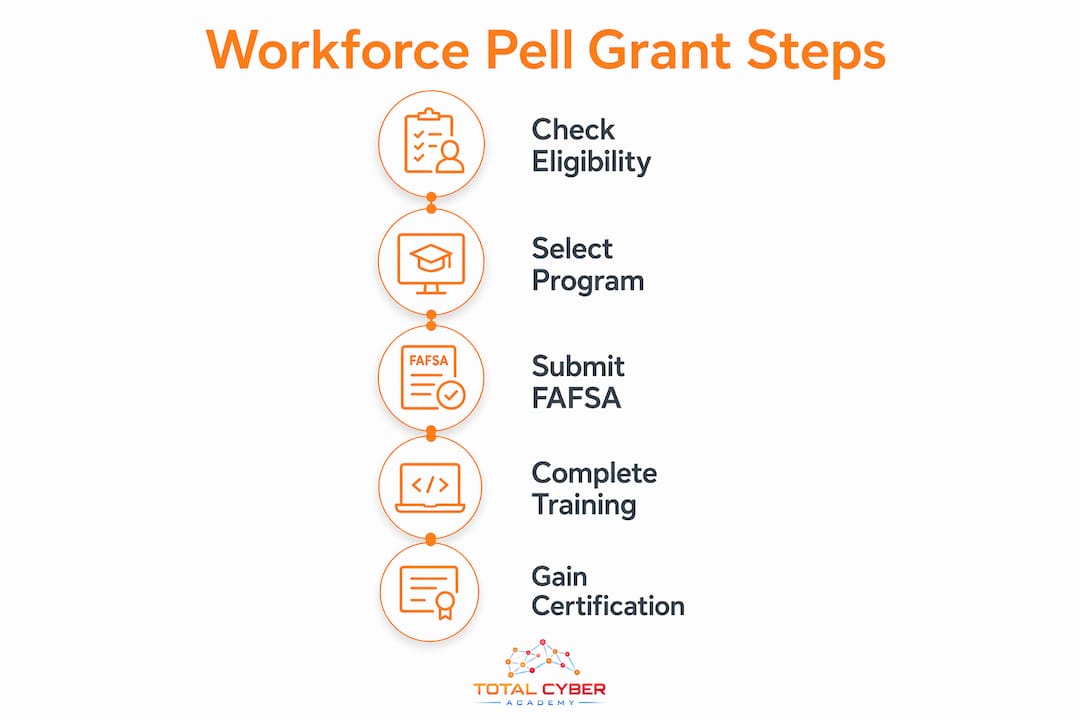
The program carries strict accountability requirements. Eligible programs must meet at least 70% completion and 70% job placement rates. Those thresholds exist to protect students from enrolling in programs that collect federal dollars without producing employment outcomes.
| Requirement | Specification |
|---|---|
| Program length | 150–599 clock hours |
| Program duration | 8–14 weeks |
| Occupation alignment | High-skill, high-wage, or in-demand fields |
| Completion rate threshold | At least 70% of enrolled students |
| Job placement rate threshold | At least 70% of completers |
| Pell Grant lifetime limit | Counts against the standard 12-semester limit |
Funding amounts follow the standard Pell Grant calculation, based on financial need, enrollment status, and program cost. One critical planning detail: Workforce Pell grants count against the lifetime Pell Grant limit. Using this funding for a short-term certificate reduces the federal aid available for future degree programs. Applicants should weigh that tradeoff carefully before committing.
Pro Tip: Verify that your specific program, not just the school, holds Title IV eligibility before submitting your FAFSA. Institutional accreditation does not automatically extend to every program the school offers.
What alternative funding options exist for programs not eligible for federal aid?
Many certification programs fall outside the federal aid system entirely. A program may be too short, not credit-bearing, or offered by a provider without Title IV approval. That does not mean funding is unavailable. It means the search requires a different approach.
- State workforce development grants. Most states administer workforce training funds through their labor departments or workforce development boards. These grants often flow through employers or training providers rather than directly to students. Check with your state’s workforce agency or your employer’s HR department to identify active programs.
- Private foundation scholarships. Private foundations and professional associations are a frequently overlooked source of certification funding. Organizations in cybersecurity, healthcare, and skilled trades maintain scholarship funds specifically for credential seekers. Research associations relevant to your target certification and apply broadly.
- Employer tuition reimbursement negotiation. Many employers have reimbursement budgets that go unused each year. Request a meeting with your manager or HR contact before enrolling. Frame the certification as a direct benefit to your current role. Specificity increases approval rates.
- Payment plans and low-interest loans. Some training providers offer installment plans with no interest for short programs. Credit unions and community development financial institutions (CDFIs) offer low-interest personal loans for education. Treat these as last-resort options after exhausting grant and reimbursement sources.
- Professional development programs. Corporate professional development funding sometimes covers certification costs when the credential aligns with a defined career path inside the organization.
Pro Tip: When researching private grants, search by occupation, not just by the word “certification.” Many foundation grants are categorized by industry or job title, not credential type.
How to apply for workforce certification funding and maximize your award
Applying for certification support funds requires preparation across multiple systems simultaneously. The process is manageable when broken into clear steps.
- Complete the FAFSA first. The FAFSA is the universal gateway to federal aid. List the specific school offering your program. Aid is tied to the institution, not the credential category.
- Confirm program Title IV eligibility. Contact the school’s financial aid office and ask directly whether your specific program qualifies for federal aid. Do not assume eligibility based on accreditation status alone.
- Understand enrollment status impact. Full-time enrollment maximizes your Pell Grant award. Part-time enrollment reduces it proportionally. For short-term programs, full-time enrollment is often the only option given the compressed schedule.
- Coordinate employer reimbursement with federal aid. Employer reimbursement does not automatically reduce your Pell Grant. Confirm the coordination rules with your financial aid office, because some institutional aid packages may adjust based on outside funding.
- Track your cumulative Pell Grant usage. The federal Student Aid website shows your remaining Pell eligibility. Review it before applying for Workforce Pell funding to confirm you have sufficient lifetime aid remaining.
- Apply for state and private grants in parallel. Do not wait for federal aid decisions before pursuing state workforce development grants or private scholarships. Application timelines vary, and some state programs have rolling deadlines.
Veterans have additional workforce funding options through programs like the GI Bill and SkillBridge, which can cover certification training costs entirely outside the standard federal aid system.
What are common misconceptions about obtaining certification funding?
Several persistent misunderstandings cause applicants to miss funding they qualify for or waste time pursuing aid they cannot receive.
- Assuming accreditation equals federal aid eligibility. Institutional accreditation is mandatory for federal aid, but program-level Title IV eligibility depends on length, credit or clock hours, and gainful employment alignment. A school can be fully accredited while offering programs that do not qualify for Pell or Direct Loans.
- Ignoring program length requirements. Programs under 150 clock hours do not qualify for the Workforce Pell Grant. Programs over 599 clock hours fall under standard Pell rules. Applicants who skip this check often discover ineligibility after enrollment.
- Overlooking employer and state funding. Many workforce funding programs do not disburse funds directly to students. They require employer involvement or flow through training providers. Students who only check the FAFSA miss these entirely.
- Not tracking Pell Grant lifetime usage. Every semester of Pell Grant use counts against a 12-semester lifetime limit. Using Workforce Pell for a short-term certificate is a legitimate choice, but it should be a deliberate one.
- Ignoring compliance obligations. Grant recipients sometimes face reporting requirements, such as documenting employment outcomes after program completion. Failing to meet these obligations can affect future aid eligibility.
Verifying program-level Title IV eligibility with the school’s financial aid office before applying is the single most effective step to avoid wasted effort and enrollment mistakes. Financial aid experts consistently identify this verification gap as the most common and costly error applicants make.
Key Takeaways
Workforce certification funding is most accessible when applicants verify program eligibility early, combine multiple funding sources, and actively pursue employer and state grants alongside federal aid.
| Point | Details |
|---|---|
| Workforce Pell Grant eligibility | Programs must be 150–599 clock hours, 8–14 weeks, and aligned with in-demand occupations. |
| Lifetime Pell limit applies | Using Workforce Pell for short-term credentials reduces future aid for degree programs. |
| Employer funding is often untapped | DOL-backed programs reimburse 50–80% of training costs through employer-state partnerships. |
| Program eligibility differs from school eligibility | Confirm Title IV status at the program level, not just the institutional level. |
| Private grants fill federal gaps | Professional associations and foundations fund certifications outside the federal aid system. |
Why the funding picture is more complex than most guides admit
Workforce certification funding sounds straightforward on paper. In practice, the gap between “your school is accredited” and “your program qualifies for federal aid” catches more applicants off guard than any other single factor. I have seen motivated career changers enroll in a 12-week cybersecurity bootcamp, assume their FAFSA would cover it, and discover weeks later that the program did not meet Title IV clock-hour thresholds.
The Workforce Pell Grant expansion starting in 2026 is genuinely significant. It creates a real debt-free pathway for short-term credential seekers who previously had no federal grant option. But the accountability requirements, specifically the 70% completion and placement thresholds, mean that not every program will pursue or maintain eligibility. Applicants need to ask providers directly whether their specific program is Workforce Pell approved, not just whether the school participates.
My strongest advice: treat funding research as a parallel process to program research, not a follow-up step. Start your FAFSA, contact your employer’s HR department, and search your state’s workforce development board website at the same time you are evaluating training providers. Waiting until after enrollment to sort out funding is the most expensive mistake you can make.
Private and state grants deserve far more attention than they typically receive. Many applicants exhaust their federal options and stop there. Professional associations in cybersecurity, IT, and healthcare maintain scholarship funds that go underfunded simply because applicants do not know to look. Those grants do not reduce your federal aid. They stack on top of it.
— Alden
Totalcyber’s cybersecurity training and workforce funding support
Totalcyber is a veteran-owned cybersecurity training organization that prepares career changers, veterans, and IT professionals for in-demand roles through hands-on, certification-focused instruction.
Totalcyber’s programs are designed to align with workforce funding eligibility standards, including the credential and occupational alignment requirements that federal and state programs prioritize. Whether you are exploring the Workforce Pell Grant, employer reimbursement, or veteran-specific funding like the GI Bill, Totalcyber’s cybersecurity career training is built to meet those standards. Visit Total Cyber Academy to review available courses, confirm funding compatibility, and take the first step toward a credential that employers in cybersecurity actively seek.
FAQ
What is workforce certification funding?
Workforce certification funding is financial aid from federal, state, employer, or private sources that covers the cost of short-term training programs leading to workforce-recognized credentials. It includes grants, loans, employer reimbursement, and scholarships aligned with in-demand occupations.
Does the Workforce Pell Grant cover all certification programs?
No. Starting July 1, 2026, the Workforce Pell Grant covers programs between 150 and 599 clock hours and 8 to 14 weeks in length that align with high-skill, high-wage, or in-demand occupations. Programs outside those parameters do not qualify.
How do I know if my certification program qualifies for federal aid?
Contact the school’s financial aid office and ask whether your specific program holds Title IV eligibility. Institutional accreditation alone does not guarantee program-level federal aid qualification.
Can I combine employer reimbursement with federal workforce funding?
Yes. Employer tuition reimbursement generally does not reduce Pell Grant eligibility, but confirm the coordination rules with your financial aid office, as institutional aid packages may vary.
What happens to my Pell Grant eligibility if I use it for a short-term certificate?
Workforce Pell grants count against the standard 12-semester lifetime Pell limit. Using this funding for a short-term credential reduces the federal grant aid available for future degree programs, so plan usage carefully.
Recommended
- Cybersecurity Workforce Veteran Initiatives: 2026 Guide – Total Cyber Academy!
- SkillBridge Program for Veterans: 2026 Complete Guide – Total Cyber Academy!
- GI Bill Cybersecurity Training Programs: 2026 Veteran Guide – Total Cyber Academy!
- What Is the Cybersecurity Skills Gap in 2026? – Total Cyber Academy!