
In short, cloud engineering suits readers who want to build and operate scalable systems, while cybersecurity suits readers who want to defend those systems, investigate incidents, and manage risk. Both paths share a growing overlap in cloud security, and both demand a real investment in foundational skills before the paychecks catch up to the job titles.
TL;DR:
- Cloud engineering requires scripting, platform familiarity, and infrastructure-as-code experience, with emphasis on designing scalable, cost-efficient systems.
- Both career paths involve substantial groundwork in operating systems and networking, with timelines ranging from 3 to 18 months based on current skill levels.
- Hybrid roles such as cloud security engineer increasingly blur the lines, requiring understanding of both infrastructure deployment and security measures.
- Age is not a barrier, and motivated career changers can achieve entry-level positions in 6 to 12 months by focusing on fundamentals and certifications first.
Table of Contents
- At-a-Glance Comparison: Side-by-Side Summary
- Day-to-Day Responsibilities and What Actual Work Looks Like
- Skills, Prerequisites and Certifications: What to Learn First
- Earnings and Job Outlook: Data-Driven Expectations
- Which Fits You: A Practical Decision Framework
- Learning Timeline and Realistic Roadmap to an Entry-Level Role
- Overlap and Hybrid Roles: Cloud Security and Where Paths Meet
- Total Cyber Academy Perspective and Proof Points
- What Career Changers Get Wrong About This Choice
- How Total Cyber Academy Can Help: Training Options and Next Steps
- FAQ
- Sources
At-a-Glance Comparison: Side-by-Side Summary
Before committing months of study to either direction, it helps to see the two paths next to each other. Cloud engineering centers on designing, deploying, and maintaining the infrastructure that applications run on. Cybersecurity centers on protecting that infrastructure, along with the data and people who depend on it, from compromise.
- Role focus: cloud engineers build and scale systems; cybersecurity professionals monitor, detect, and respond to threats against those systems.
- Typical job titles: cloud engineer, cloud infrastructure engineer, DevOps engineer versus security analyst, SOC analyst, penetration tester.
- Usual employers: cloud-native startups, managed service providers, and enterprise IT teams for cloud roles; financial services, government contractors, and managed security providers for cybersecurity roles.
- Entry requirement shape: cloud roles often expect networking and systems administration basics plus a platform certification; cybersecurity roles often expect foundational IT knowledge plus a security certification like Security+.
- Pay and growth signpost: both fields show strong demand, with cybersecurity carrying a well-documented wage and growth outlook from federal labor data.
- Best for: choose cloud engineering if you enjoy building systems end to end; choose cybersecurity if you prefer investigating problems and reducing risk.
Day-to-Day Responsibilities and What Actual Work Looks Like
The clearest way to tell these careers apart is to look at a typical Tuesday. A cloud engineer spends much of the day designing infrastructure, writing deployment scripts, and watching dashboards for performance or cost anomalies. A cybersecurity analyst spends much of the day triaging alerts, scanning for vulnerabilities, and documenting how an incident unfolded.
Cloud engineers typically handle:
- Designing infrastructure architecture and writing infrastructure-as-code templates for repeatable deployments.
- Managing cloud deployments across environments, from staging to production.
- Monitoring system observability tools to catch performance degradation before users notice.
- Balancing cost efficiency against availability, since over-provisioning wastes budget and under-provisioning causes outages.
Cybersecurity professionals typically handle:
- Monitoring security information and event management systems for suspicious activity.
- Running vulnerability scans and coordinating patching schedules with IT teams.
- Leading or supporting incident response when a breach or suspicious access pattern surfaces.
- Writing and maintaining policy and compliance documentation tied to frameworks like NIST or ISO 27001.
Team structures differ too. Cloud engineers often sit inside a platform or DevOps group, working closely with software developers and site reliability engineers to ship features without breaking production. Cybersecurity professionals more often sit inside a security operations center or a dedicated risk team, coordinating with IT help desks, legal, and sometimes law enforcement when an incident escalates. Neither role is purely technical: cloud engineers explain infrastructure trade-offs to product managers, and security analysts explain risk in plain language to executives who are not technical specialists.
Skills, Prerequisites and Certifications: What to Learn First
Both paths assume a baseline most career changers underestimate: comfort with operating systems, basic networking, and command-line tools. Skipping that foundation to jump straight into advanced cloud or security topics tends to backfire, since neither field forgives gaps in fundamentals for long.
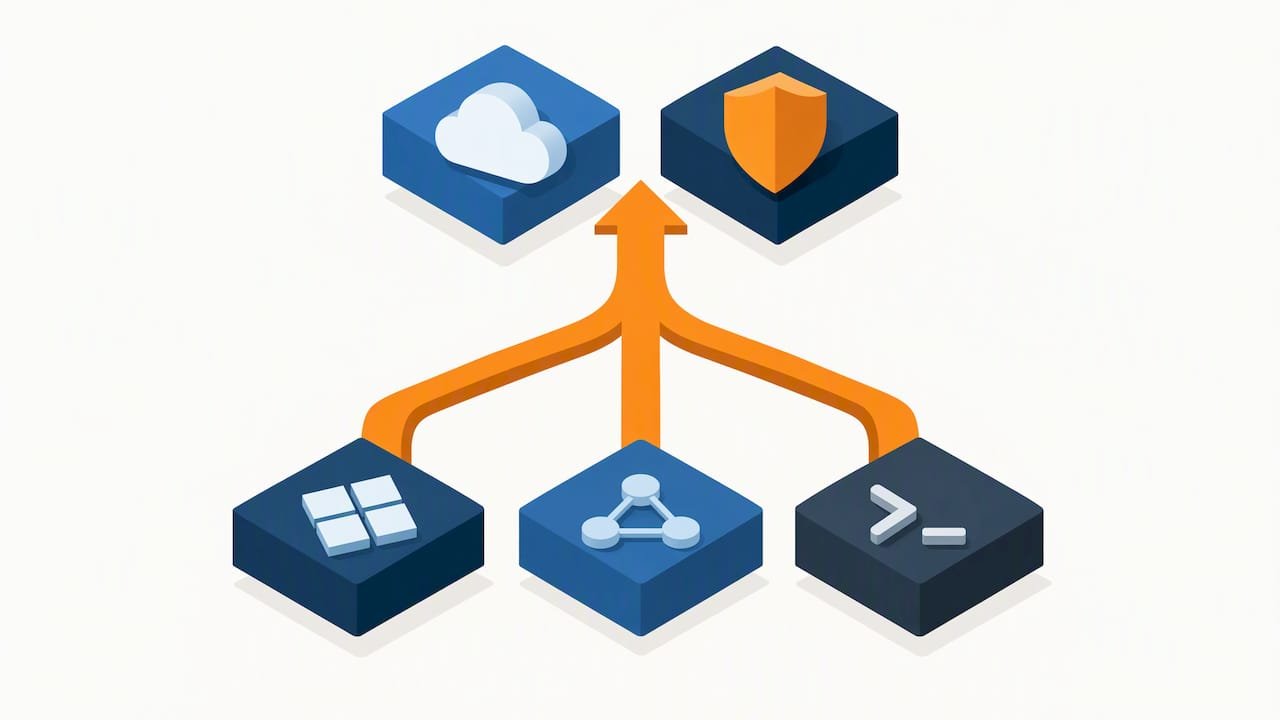
For cloud engineering, employers look for scripting ability (often Python or Bash), familiarity with containerization, and hands-on experience with a major cloud platform. For cybersecurity, employers look for an understanding of threat detection, log analysis, and the basics of risk frameworks. Certifications signal readiness to hiring managers who cannot otherwise verify hands-on skill from a resume alone.
A practical starting sequence looks like this:
- Build fundamentals first. Learn operating systems, networking, and basic scripting before touching platform-specific tools.
- Earn an entry certification. CompTIA Network+ or Security+ for cybersecurity, or a platform fundamentals badge for cloud, gives you a recognized baseline.
- Practice in labs. Hands-on environments turn textbook knowledge into muscle memory that interviewers can actually probe.
- Build a portfolio project. A documented home lab, a small cloud deployment, or a writeup of a Capture-the-Flag exercise gives you something concrete to discuss.
Nontechnical skills matter more than most newcomers expect, and structured training programs can help develop both technical and soft skills critical for success. Research on hiring managers found problem solving (29%), collaboration (24%), and communication (22%) rank among the top qualities employers screen for, often as heavily as technical chops. The same research found a gap between expectation and reality: only a minority of hiring managers believe entry-level candidates can handle cloud-security tasks, while some say those tasks require junior-level experience. That gap is worth planning around rather than being surprised by.
Pro Tip: Treat your first certification as a floor, not a finish line. Pair it with a documented lab project before you start applying.
Earnings and Job Outlook: Data-Driven Expectations
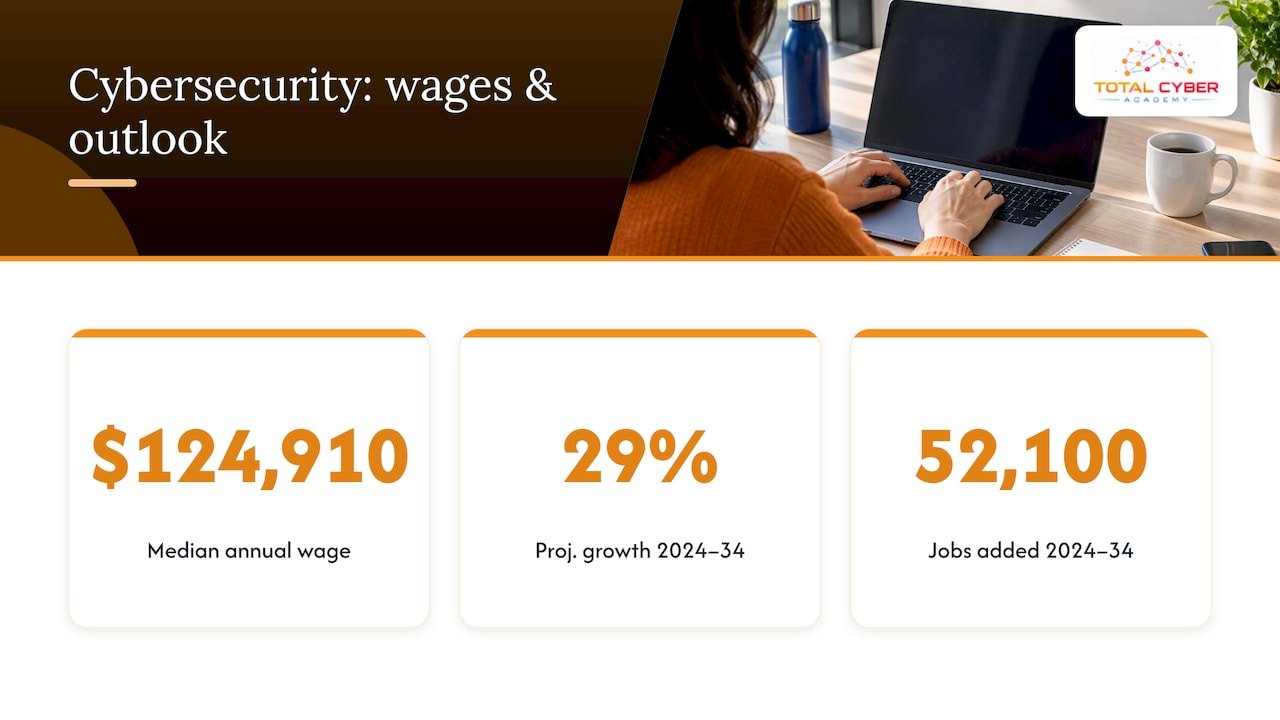
Wage data gives career changers something firmer to plan around than anecdotes. The median annual wage for information security analysts was $124,910 as of May 2024, according to the Bureau of Labor Statistics, with employment projected to grow 29% between 2024 and 2034, adding roughly 52,100 jobs. That growth rate is far faster than most occupations tracked by the agency.
Cloud engineering does not have its own dedicated BLS category, but the computer network architects profile covers closely overlapping duties and serves as a reasonable proxy, since much of that growth is tied to cloud adoption and infrastructure modernization.
Demand signals extend beyond raw headcount. ISC2 workforce research found that A large majority of organizations reported internal skills gaps in 2024, with cloud security and AI among the top areas employers struggle most to fill. That combination, strong growth plus a persistent skills gap, suggests the people willing to build cloud-security fluency now are positioning themselves ahead of a market that has not caught up with its own hiring needs.
Which Fits You: A Practical Decision Framework
Rather than guessing, answer a few direct questions about how you like to work and what you can tolerate day to day.
- Do you prefer building or defending? If you enjoy architecting systems and watching them scale, lean cloud. If you enjoy investigating anomalies and stopping bad actors, lean cybersecurity.
- Do you want long projects or short, urgent incidents? Cloud work tends toward multi-week builds and migrations. Cybersecurity work often shifts between steady monitoring and sudden, time-pressured incidents.
- Can you tolerate on-call rotations? Both fields have them, but security incident response tends to carry sharper urgency when something goes wrong at 2 a.m.
- Do you want deep platform specialization? Cloud engineering rewards going deep on one or two major platforms. Cybersecurity rewards broader exposure across systems, networks, and applications.
- What is your realistic timeline to a paycheck? Both paths take real preparation. Expecting a six-figure offer within a few months of starting is the most common miscalculation career changers make, and underestimating prerequisite knowledge is the second.
Matching your answers to a path is less about talent and more about temperament. Someone who thrives on ambiguity and incident pressure often finds cybersecurity energizing rather than draining. Someone who prefers methodical, project-based work often finds cloud engineering a better long-term fit. Either way, treat the first year as skill-building, not income maximization: the wage data above reflects experienced professionals, not day-one hires.
Learning Timeline and Realistic Roadmap to an Entry-Level Role
Timelines vary by background, but a rough shape holds across both paths. Absolute beginners should plan on 3 to 6 months for fundamentals: operating systems, networking basics, and command-line comfort. Career changers with some IT background can often accelerate to 6 to 12 months by moving straight into role-specific certifications and lab work. Readers aiming for deeper specialization, such as cloud security or penetration testing, should expect 12 to 18 months to build a credible portfolio.
- Months 1 to 3: fundamentals in operating systems, networking, and basic scripting.
- Months 3 to 6: an entry certification such as Security+ or Network+, paired with structured lab practice.
- Months 6 to 12: role-specific certification, a documented portfolio project, and hands-on experience through Capture-the-Flag exercises, internships, or small contract work.
Pro Tip: A volunteer security audit for a local nonprofit or a documented home lab often carries more interview weight than a certificate alone, because it proves you can apply what you studied.
Overlap and Hybrid Roles: Cloud Security and Where Paths Meet
Neither path exists in isolation anymore. Cloud security sits at the intersection, and it is where employer demand is growing fastest. Skills like secure architecture design, identity and access management, and misconfiguration remediation now show up in job postings for both “cloud engineer” and “security analyst” roles.
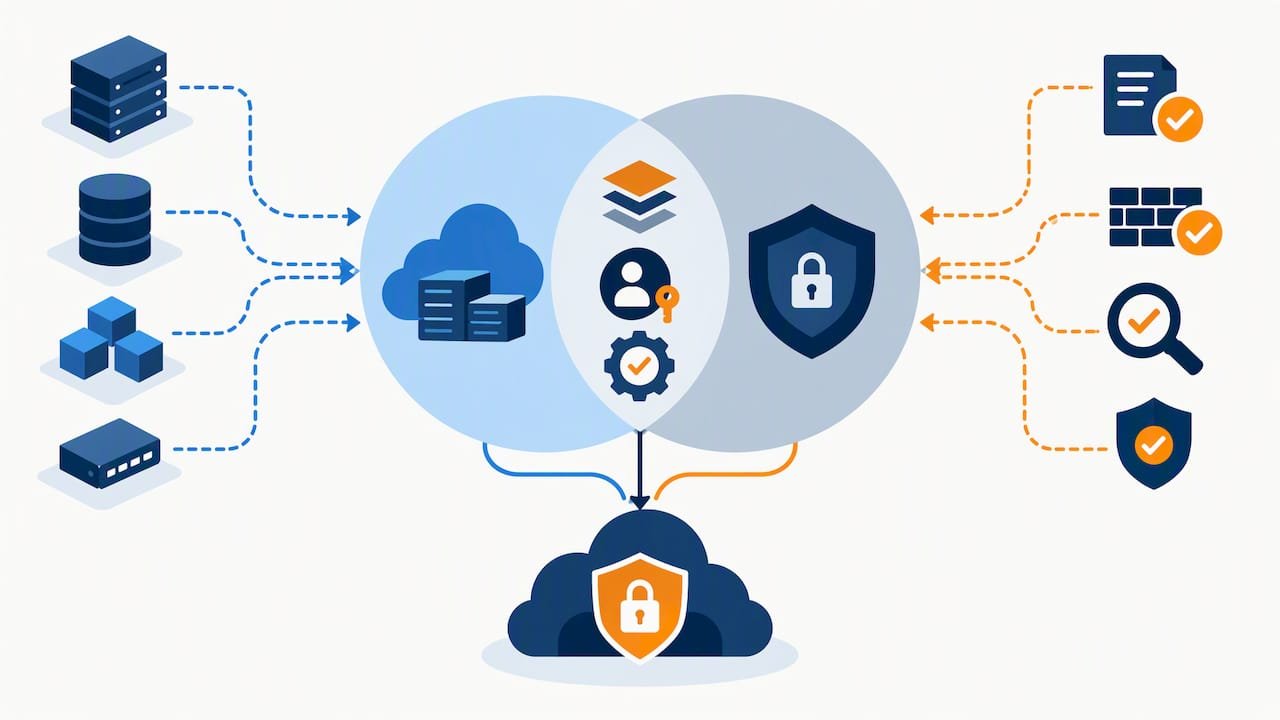
Hybrid titles such as cloud security engineer, DevSecOps engineer, and cloud security analyst reflect this blending. Employers in these roles expect candidates to understand infrastructure deployment well enough to secure it, not just monitor it from the outside.
For readers already leaning cloud, layering in security fundamentals, especially identity management and secure configuration, measurably improves hireability without requiring a full career pivot. For readers leaning security, learning how cloud infrastructure actually gets built makes threat detection and incident response far more precise, since you understand what normal looks like before you can spot what is not.
Total Cyber Academy Perspective and Proof Points
Our programs are built for people who want hands-on readiness rather than exam-only theory. We offer veteran-owned, instructor-led training with live labs and real-world scenarios, serving beginners, career changers, veterans, and working IT professionals who want a structured path into cybersecurity or cloud work. Our team achieved a top rank in the CompTIA Partner Summit Capture-the-Flag competition, reflecting the hands-on practice we build into our courses.
When evaluating any training provider, look for four things: real lab access, direct instructor availability, structured certification preparation, and career support that extends past the exam. Those four checkpoints separate programs that build job-ready skill from programs that only build a certificate.
What Career Changers Get Wrong About This Choice
Most advice on this topic treats cloud engineering and cybersecurity as a binary choice decided by personality type alone. That undersells how much the two fields now overlap and overstates how fast either one pays off. The wage and growth numbers from the Bureau of Labor Statistics are real, but they describe experienced professionals, not people six months into their first certification.
The bigger miss is prerequisite knowledge. Career changers often chase the certification before the foundation, then struggle in interviews when asked basic networking or systems questions that a textbook badge does not cover. Our honest read: pick a direction based on the daily work you actually enjoy, not the headline salary, then spend real time on fundamentals before chasing a credential. The skills gap data on cloud security and AI suggests the people who build that foundational fluency now will have more options in three years than those who rush a certificate and skip the groundwork.
— Alden
How Total Cyber Academy Can Help: Training Options and Next Steps
Wherever you land between these two paths, we offer a direct route to get there without piecing together scattered tutorials on your own. Our Cybersecurity Engineer Program and Cloud Engineer Program build fundamentals through job-ready skill in a structured sequence, and our Security+ and Cloud+ prep courses work well if you already know which certification you want next.
If you are still deciding between formats, our orientation session walks through how on-demand and live course options differ so you can pick what fits your schedule. Start by browsing our program pages to see which track matches the path you chose above.
FAQ
Which pays more, cybersecurity or cloud engineering?
Cybersecurity has well-documented pay data: the median annual wage for information security analysts was $124,910 as of May 2024. Cloud engineering does not have its own dedicated wage category, so direct comparison is harder, though overlapping infrastructure roles show strong demand tied to cloud adoption.
Is 28 too late to start in cloud or cybersecurity?
No. Both fields regularly hire career changers beyond their early career years, since employers care more about demonstrated skill and certifications than age. A focused 6 to 12 month learning plan can get a motivated career changer to entry-level readiness regardless of starting age.
Is cybersecurity a dead-end job?
The data points the other way: the Bureau of Labor Statistics projects 29% employment growth for information security analysts between 2024 and 2034, far faster than most occupations. Persistent skills gaps reported by employers also suggest sustained demand rather than market saturation.
Can you make $500,000 a year in cybersecurity?
That level of pay is not representative of the field. The documented median annual wage for information security analysts is $124,910, and six-figure salaries well above that median typically belong to senior leadership or specialized consulting roles rather than entry or mid-career positions.
Sources
- Information Security Analysts : Occupational Outlook Handbook: : U.S. Bureau of Labor Statistics
- Cybersecurity skills gaps now outpace headcount shortages, ISC2 workforce study finds
- ISC2 Research: Best Practices for Hiring Resilient Cyber Teams