
ISC2 does not publish a single official CISSP pass percentage, and treating any one number as gospel will mislead your planning. Industry commentary and candidate forums commonly cite a range near 50 to 70 percent for prepared, first-time test takers, though these figures are self-reported and unverified. Rather than chasing a headline number, we recommend building a readiness checklist and practicing under realistic, timed conditions.
TL;DR:
- The exam presents 100 to 150 operational items and can stop after reaching 95% confidence in a pass or fail decision, at the item limit, or when time runs out.
- Candidates without recent security management experience often report needing 300 to 500 study hours over several months; practice scenario questions across all eight domains.
- Registration costs $749 in most regions; candidates who fail must wait 30 days before a second attempt and may test no more than four times in 12 months.
Table of Contents
- Why ISC2 doesn’t release a single pass percentage
- Published pass-rate estimates and how to read them
- How the adaptive format and scoring rules shape your result
- Study hours, experience, and habits that correlate with passing
- What the exam actually costs and how retakes work
- A five-factor readiness check before you schedule your exam
- How we support CISSP candidates through this process
- Readiness matters more than a headline number
- Structured CISSP prep built around what the exam tests
- FAQ
- Sources
Why ISC2 doesn’t release a single pass percentage
The Candidate Information Bulletin explains that CISSP results are determined by a scaled score cutoff of 700 out of 1000, not by a fixed percentage of correct answers. Because the exam uses Computerized Adaptive Testing (CAT), the question count and difficulty shift based on how each candidate performs, which makes a single pass rate statistically misleading across the whole population.
The CAT engine selects each subsequent item based on prior answers, then applies psychometric stopping rules to decide when enough information exists to render a decision. This means two candidates can take exams of different lengths and face different item difficulty, yet both can pass or fail with full validity.
Practical consequences worth understanding:
- ISC2 does not report an aggregate pass percentage for any exam window or year.
- Your result depends on scaled performance relative to item difficulty, not raw percent correct.
- Final determinations follow a defined post-test statistical process, not a simple answer count.
Published pass-rate estimates and how to read them
Estimate range: Forum threads and third-party writeups commonly place pass-rate impressions in a 50 to 70 percent range for candidates who consider themselves well prepared, though these numbers are not official and carry meaningful sample bias.
Self-reported data skews in both directions. Candidates who fail are less likely to post publicly, which can inflate perceived success rates, while anxious first-timers may over-represent themselves in forums seeking reassurance, which can do the opposite. Neither effect is measurable, so neither correction is reliable.
A more defensible approach is to treat any published range as directional rather than predictive, and to focus on the behaviors that reliably correlate with success:
- Candidates with several years of relevant experience across multiple domains tend to report smoother outcomes.
- Those who complete multiple full-length CAT-style practice exams describe better pacing and less exam-day surprise.
- Structured study over 300 to 500 hours is frequently associated with stronger readiness than cramming.
How the adaptive format and scoring rules shape your result
Understanding the mechanics behind CISSP scoring clarifies why “pass rate” is the wrong frame entirely.
- Adaptive item count. The exam delivers between 100 and 150 operational items, and the system can stop as soon as it has enough statistical confidence in your result, according to the Candidate Bulletin.
- Scaled scoring. Your result is reported against a 1000-point scale with a passing standard of 700, not as a raw percentage of correct answers, so item difficulty is baked into the outcome.
- Three decision rules. The exam ends when one of three conditions triggers: a 95 percent confidence interval around pass or fail is reached, the maximum item count is hit, or a rule known as R.O.O.T. (Run Out Of Time) applies.
These rules mean the exam is calibrated to your performance in real time rather than graded against a fixed answer key after the fact. A candidate who answers confidently and consistently at a high difficulty level can finish in closer to 100 items, while someone whose performance hovers near the cutoff may see the full 150.
Study hours, experience, and habits that correlate with passing
Preparation quality matters more than any single statistic. Many candidates without recent hands-on security management experience report needing 300 to 500 study hours spread across several months to feel ready across all eight domains.
Real-world experience plays a measurable role too. The CISSP Exam Refresh FAQ notes that the exam is experiential by design, meaning scenario-based items reward candidates who have actually managed risk, policy, or security operations rather than only memorized definitions. ISC2 states it cannot guarantee a pass regardless of preparation, but meeting the experience expectations before attempting the exam improves readiness. Candidates who lack the full experience requirement can explore how an experience waiver might apply to their background.
Habits that correlate with stronger outcomes include:
- Allocating study time proportionally across all eight domains rather than favoring familiar technical areas.
- Practicing with CAT-style adaptive exams instead of only static question banks.
- Working scenario-based and management-focused questions that mirror the exam’s risk-oriented mindset.
Pro Tip: Study the most recent edition of your prep materials only. Domain weighting and terminology shift between exam refreshes, and outdated guides can cost you points on current scoring.
What the exam actually costs and how retakes work
Budgeting realistically means accounting for more than the registration fee. ISC2 lists the standard CISSP registration fee at $749 in most regions, though total spending including prep materials and courses often lands in a wider range once study resources are factored in, as detailed in our CISSP exam cost breakdown.
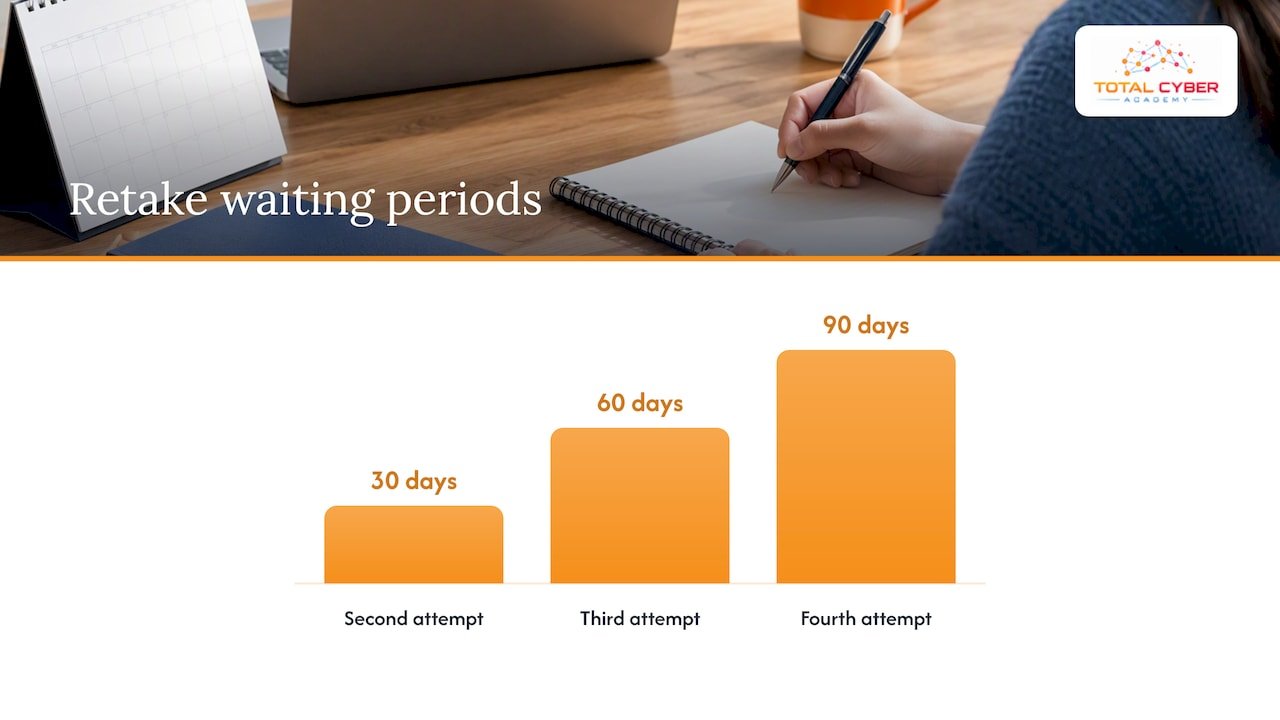
If you do not pass on your first attempt, ISC2’s after-your-exam guidance outlines the retake schedule you need to plan around:
- Wait 30 days before a second attempt, 60 days before a third, and 90 days before a fourth.
- You may attempt the exam a maximum of four times within any 12-month period.
- Test centers may provide provisional, unofficial results on-site, with final official results following a formal review process.
A five-factor readiness check before you schedule your exam
Rather than guessing your odds from someone else’s forum post, score your own readiness across five factors tied directly to what the exam rewards.
- Experience: Rate your years of hands-on work across CISSP domains from 0 (none) to 5 (extensive, multi-domain).
- Study hours logged: Score how close you are to the 300 to 500 hour range typically cited for thorough preparation.
- Scenario-based practice: Rate how much time you’ve spent on management and risk-judgment questions versus pure recall.
- CAT familiarity: Score your comfort with adaptive, timed practice exams that mimic the real format.
- Domain confidence: Rate your self-assessed strength across all eight domains, not just your favorites.
| Score band | What it suggests | Suggested next step |
|---|---|---|
| 20 | Pass-likely | Schedule your exam and do a final review pass |
| 12 | Borderline | Target your weakest domains and take another full practice exam |
| 5 | Needs more prep | Consider structured coursework and delay scheduling |
How we support CISSP candidates through this process
We built our ISC2 CISSP On-Demand Course around the same domains and scenario-based reasoning the exam tests, not just memorization drills. Our course content includes structured domain coverage, practice exams that mirror the CAT experience, and mentor access for candidates working through weaker areas.
We also maintain detailed breakdowns of what candidates should budget for, including our CISSP exam cost guide and a 120-CPE maintenance checklist for after you certify, so planning extends beyond exam day itself.
Readiness matters more than a headline number
Chasing a single pass-rate figure distracts from the work that actually determines your outcome: domain coverage, scenario reasoning, and realistic practice under timed conditions. The readiness framework above provides a more honest signal than any forum average ever will. Schedule when your score says you’re ready, lean on official ISC2 sources for procedural questions, and treat preparation as the variable you control.
— Alden
Structured CISSP prep built around what the exam tests
If your readiness score landed in the borderline or needs-more-prep range, structured coursework closes that gap faster than self-study alone. Our ISC2 CISSP On-Demand Course gives you domain-by-domain instruction, hands-on labs, and full-length practice exams built to mirror the adaptive format you’ll face on test day.

Candidates working through the program also get mentor support from working cybersecurity professionals, useful when scenario-based questions require judgment calls, not just memorized facts.
- Review our CISSP exam cost breakdown before you register so there are no surprises.
- Browse our full course catalog to see how CISSP prep fits alongside other certification paths.
- Visit the Total Cyber Academy homepage to explore programs and connect with admissions.
FAQ
Is CISSP the hardest certification to pass?
CISSP is widely considered one of the more demanding credentials due to its broad eight-domain scope and management-level reasoning requirements, but difficulty is relative to your background and experience. Candidates with limited security management exposure often find it harder than those who already work in risk or governance roles.
Is CISSP still worth pursuing in 2026?
CISSP remains one of the most recognized credentials for senior security and risk management roles, and its demand has not diminished as organizations continue prioritizing structured risk governance. Whether it’s worth it for you depends on your career goals and whether your role or target role involves management-level security responsibility.
Where can I find practice questions for the CISSP exam?
Practice questions are best sourced from materials aligned to the current exam version and domain weighting, since outdated question banks can mislead your preparation. Structured courses that include CAT-style adaptive practice exams, like the format covered in our on-demand course, give a closer approximation of real exam conditions than static question lists.
How many people hold the CISSP certification?
ISC2 does not publish a specific certified-holder count in the sources we reference here, so we won’t cite a figure we can’t verify. For current certification population data, check ISC2’s own published member and certification statistics directly.