
CompTIA allows candidates to retake a failed exam, but every attempt requires its own exam voucher, and a waiting period applies before you can sit again. Waiting periods may apply between retakes, so check CompTIA’s current policy before scheduling. Before scheduling anything, check your voucher’s expiration date and review the current policies posted by CompTIA and Pearson VUE.
TL;DR:
- CompTIA sets no overall attempt cap, but waiting periods can apply after failures and may vary by exam, so verify current rules before rebooking.
- A failed attempt usually costs another full price voucher unless a vendor bundle includes a retake; check activation rules and eligibility dates before purchasing.
- Vouchers may expire and are generally nonrefundable; check the printed expiration date before buying, because promotional discounts usually cannot be applied retroactively.
- Missing an appointment or canceling late can forfeit the voucher without a refund, while timely cancellation may preserve it; confirm Pearson VUE’s current deadlines.
- Take a complete practice exam, target weak objectives with practical labs, and buy the voucher only after you consistently reach your target score.
Table of Contents
- How CompTIA Retake Rules Work: Attempt Limits and Waiting Periods
- Exam Vouchers: Buying, Expiration, Refunds, and Retake Costs
- Scheduling, Rescheduling, No-Shows, and Pearson VUE Fees
- Vendor Retake Programs: What SecurityX and Similar Offers Cover
- Practical Steps to Prepare for a Retake and Cut Costs
- Why Structured Preparation Lowers Retake Risk
- Get Exam-Ready Before You Book Your Voucher
- FAQ
- Sources
How CompTIA Retake Rules Work: Attempt Limits and Waiting Periods
CompTIA does not cap the number of times you can attempt an exam, but it does control how quickly you can try again. After a failed attempt, check CompTIA’s current policy for any waiting period before scheduling another try. Taking time to study can help you address gaps rather than guess again.
An “attempt” means you sat for the exam and received a score, pass or fail. A no-show, where you fail to appear for a scheduled appointment without canceling in advance, is treated differently and usually results in a forfeited voucher rather than a counted attempt against the retake sequence. Canceling within the allowed window, by contrast, can preserve your voucher for future use.
Because exam-specific rules can shift and vary slightly by certification, verify the exact language before you plan a retake:
- Review the CompTIA Candidate Agreement for the current attempt and waiting-period language tied to your specific exam.
- Check Pearson VUE’s candidate policies for how no-shows and late cancellations are recorded on your account.
- Confirm whether your exam has any unique retake conditions, since beta exams and some specialty certifications follow different rules than the standard core exams.
Treating these official sources as the final word protects you from relying on outdated forum posts or secondhand summaries.
Exam Vouchers: Buying, Expiration, Refunds, and Retake Costs
An exam voucher is a prepaid credit you apply during scheduling instead of paying CompTIA directly at checkout. You purchase it once, then redeem it when you book your test date through Pearson VUE.
Vouchers may expire, so check the exact expiration date printed on yours. That single detail causes more wasted money than almost any other part of the process; confirm the exact expiration printed on your voucher before you assume you have time to spare. A few policies worth keeping in mind:
- Vouchers are generally non-refundable once purchased, regardless of whether you use them.
- They are typically non-transferable after redemption, meaning you cannot hand off an unused credit to someone else once it is tied to your exam registration.
- Discount codes and promotional pricing usually apply only at the time of voucher purchase, not retroactively.
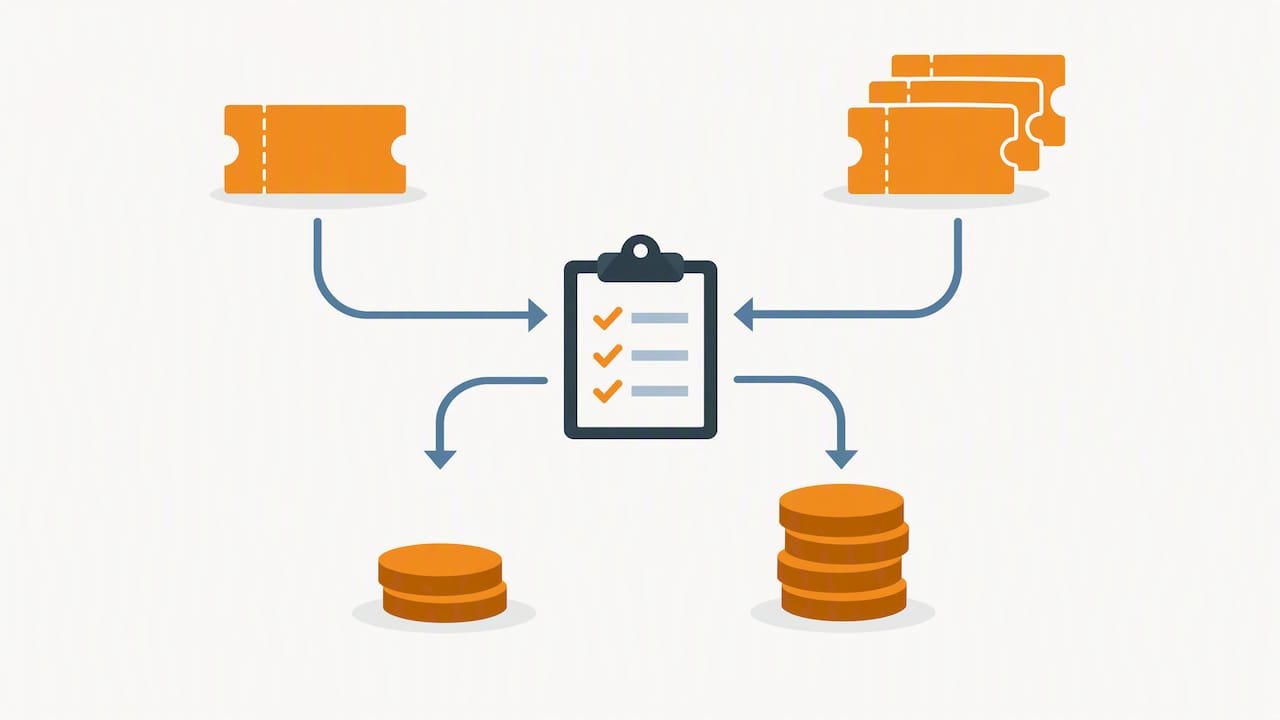
If you fail an exam, you need a new voucher to schedule a retake unless you purchased a vendor program that explicitly bundles a second attempt. Without that kind of add-on, the cost of a retake is the full price of another standard voucher, which makes passing on your first scheduled attempt the cheaper outcome by a wide margin.
Scheduling, Rescheduling, No-Shows, and Pearson VUE Fees
Pearson VUE handles exam scheduling for CompTIA, and its booking system follows a fairly standard flow: select your exam, choose a test center or online proctoring option, pick a date and time, then confirm using your voucher or payment method. Rescheduling or canceling may involve a penalty, so check Pearson VUE’s current policy before changing your appointment.
A few consequences follow if you cancel or miss your appointment entirely:
- Canceling close to your appointment may forfeit the exam fee or voucher used to book it.
- A no-show, failing to arrive without canceling, typically results in the same forfeiture, with no refund or carryover.
- Candidates who need accommodations under the Americans with Disabilities Act may qualify for extended notice periods, so it is worth contacting Pearson VUE in advance if that applies to you.
To avoid losing a voucher to a technicality, arrive early with acceptable identification, confirm your appointment details in advance, and reschedule promptly if a conflict arises.
Vendor Retake Programs: What SecurityX and Similar Offers Cover
Some vendors sell a retake-assurance add-on, often marketed as a SecurityX retake voucher or similar bundle, that includes a second exam attempt if your first one does not go well. The core idea is straightforward: pay a bit more up front, and a failed attempt does not require buying an entirely new voucher.
Terms vary by vendor and by which exam the bundle covers, so a few things are worth confirming before you buy:
- Check the activation steps required to use the included retake, since some programs require registering the bundle before your first attempt.
- Confirm the eligibility window, as many retake-assurance offers expire a set number of months after the original purchase.
- Ask whether CompTIA’s standard waiting periods still apply on top of the vendor’s retake allowance.
Compare the bundle’s total price against the cost of a single voucher multiplied by your honest estimate of needing a second attempt. If you are walking into the exam well prepared, the bundle may add cost without adding value.
Practical Steps to Prepare for a Retake and Cut Costs
The fastest way to avoid paying for a second voucher is to treat your first attempt like it’s the only one you get. That starts with identifying exactly which objective areas cost you points rather than rereading every chapter of a study guide from the beginning.
A staged approach works better than cramming broadly:
- Take a full-length practice exam first to map your weak domains before committing to a study plan.
- Review the gaps that practice exam reveals, then work hands-on labs specifically targeting those objectives.
- Finish with timed practice runs that mimic real exam conditions, and only schedule your actual attempt once you consistently clear your target score.
Pro Tip: Buy your voucher only once you are hitting your practice exam target score consistently, since an early purchase just starts the expiration clock on money you have not used yet.
If a vendor bundle genuinely lowers your expected cost based on realistic pass odds, it can make sense. Otherwise, a single voucher purchased at the right moment, paired with disciplined practice, is usually the lower-cost path.
Why Structured Preparation Lowers Retake Risk
As a veteran-owned training organization, we built our programs around the idea that passing the first time is cheaper and faster than preparing to retake. Our hands-on labs, instructor-led review sessions, and practice exams are designed to surface the same weak spots that typically cause a failed attempt, before test day rather than after it.
Candidates who struggle on CompTIA exams often lose points in the same few domains: hands-on configuration tasks, scenario-based troubleshooting, and timing under pressure. Lab rehearsal and direct instructor feedback address exactly those gaps. If you want a clearer sense of where you stand before committing to a voucher, our practice exam offerings are built for that kind of targeted check.
— Alden
Get Exam-Ready Before You Book Your Voucher
We offer a direct path to reducing retake risk rather than managing it after the fact. Our course lineup covers a range of certifications, with instructor feedback built into the preparation instead of added as an afterthought.
- The CompTIA Security+ 701 On-Demand Course and the Security+ practice exam can help you check readiness before you spend on a voucher.
- Our Network+ practice exam can help you identify gaps in your preparation before exam day.
- A+ On-Demand courses walk through hands-on scenarios that mirror the performance-based questions candidates tend to miss.
Enrolled students can see exactly how these materials fit together on our course access page. When you are ready to start, browse our full course catalog and pick the certification path that matches your next exam.
FAQ
How do I register for the CompTIA exam?
You register by purchasing an exam voucher, then scheduling your test date and location directly through Pearson VUE’s website. You will need to create a Pearson VUE account and select either an in-person test center or online proctoring, depending on the exam.
What happens when a CompTIA cert expires?
CompTIA certification validity and renewal requirements vary, so check the renewal page for your specific certification. Specific renewal requirements depend on which certification you hold, so checking your certification’s own renewal page is the safest way to confirm your deadline.
Is Security+ worth it in 2026?
Security+ remains one of the most widely recognized entry-level cybersecurity certifications, and it continues to serve as a common baseline requirement for government and contractor roles. Whether it is worth pursuing depends on your career goals, but it remains a practical foundation credential for anyone starting in security.
Is Network+ hard to pass?
Network+ is considered moderately challenging, particularly for candidates without hands-on networking experience, since it tests practical troubleshooting alongside conceptual knowledge. Candidates who combine study guides with hands-on labs and timed practice exams tend to perform better than those who rely on reading alone.