
Most beginners should start with the Core Trio: CompTIA A+, Network+, and Security+. That sequence builds the foundation for three career pathways: Infrastructure, Cybersecurity, and Data & Analytics. There are no strict prerequisites, so experienced professionals can enter higher, but for most people the right next move is simple: pick one exam, start studying, and book a date.
TL;DR:
- Most beginners should focus on the Core Trio exams, with A+ grounding hardware and troubleshooting skills, and Security+ providing crucial security knowledge.
- Learners with existing technical experience can skip A+ and start directly at Network+ or Security+, depending on their familiarity with networking or security concepts.
- The infrastructure pathway progresses from Network+ to Linux+ or Server+ and then Cloud+, emphasizing hands-on practice and vendor-specific certifications for cloud roles.
- The cybersecurity track branches into defensive and offensive specialties, such as CySA+ and PenTest+, which require practical scenario training beyond textbook study.
- Data+ is suitable for those with data analysis experience and serves as a pivot into analytics roles, with study timelines around 1 to 2 months for experienced candidates.
Table of Contents
- Quick Roadmap: The CompTIA Certification Path at a Glance
- What Do A+, Network+, and Security+ Actually Test?
- The Infrastructure Pathway: From Help Desk to Cloud Engineer
- The Cybersecurity Pathway: Defense, Offense, and AI Specialization
- Data+ and the Analytics Pathway: A Different Kind of IT Career
- When to Book Your Exam: Codes, Retirements, and Budget
- How Hands-On Training Bridges Study and Certification
- A Simple Way to Pick Your Starting Point
- Start Your CompTIA Path With Structured, Hands-On Training
- Sources
- FAQ
Quick Roadmap: The CompTIA Certification Path at a Glance
The Core Trio exists for a reason. Each cert validates a distinct layer of IT competence, and together they form the entry ticket most employers expect before considering a specialist hire.
- CompTIA A+ verifies hardware, operating system, and troubleshooting basics.
- CompTIA Network+ confirms you understand how networks move data, from cabling to cloud connectivity.
- CompTIA Security+ proves baseline security knowledge, from risk management to cryptography fundamentals.
From there, the CompTIA cybersecurity career pathway branches into three directions. The Infrastructure pathway runs through Linux+, Server+, and Cloud+. The Cybersecurity pathway climbs from CySA+ and PenTest+ toward SecurityX. The Data & Analytics pathway centers on Data+ for professionals moving into reporting and business intelligence work.
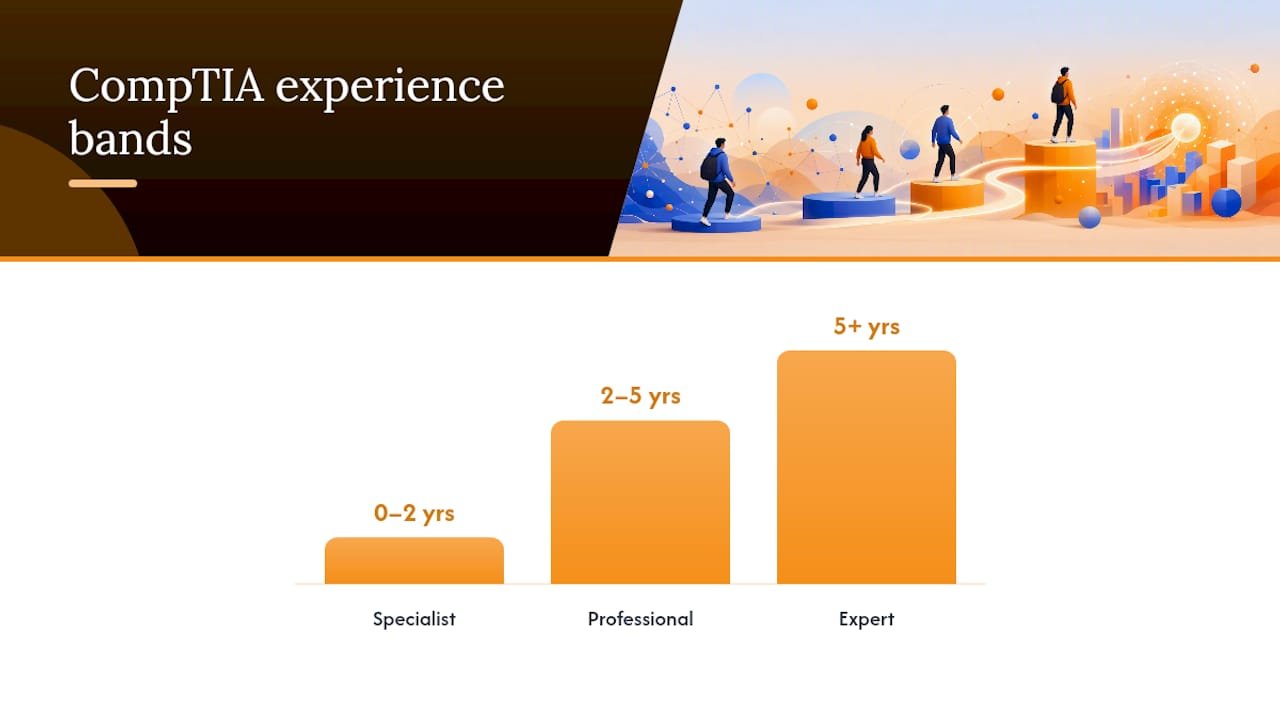
CompTIA also organizes many of these credentials into Stackable Certifications, grouped into Specialist, Professional, and Expert tiers based on years of experience. That structure matters when you’re deciding not just which exam to take, but which combination of exams actually tells an employer something coherent about your skill set.
What Do A+, Network+, and Security+ Actually Test?
Each core exam serves a different type of candidate, and knowing which one matches your situation saves months of misdirected study.
- CompTIA A+ fits total beginners and career changers with no IT background. It covers hardware, mobile devices, operating systems, and basic troubleshooting. Budget 2 to 3 months of part time study.
- CompTIA Network+ suits anyone who already understands computers but needs formal networking knowledge, including help desk staff moving toward network administration. Most candidates with some tech exposure finish in 1 to 2 months.
- CompTIA Security+ works for people targeting entry level security roles, including SOC analyst or security administrator positions. Plan on 2 to 3 months, longer if security concepts are entirely new.
You can skip A+ if you already have hands on tech experience, whether from a help desk job, military IT role, or self taught background. Skipping straight to Security+ makes sense if you’ve already worked with networks and systems and just need the security vocabulary and framework knowledge formalized. CompTIA’s own guidance confirms there’s no hard prerequisite structure forcing a strict order.
The Infrastructure Pathway: From Help Desk to Cloud Engineer

This pathway suits people who like keeping systems running rather than chasing threats. It leads toward roles like systems administrator, cloud operations technician, and network engineer.
The logical order after the Core Trio is Network+, then Linux+ or Server+ depending on your environment, then Cloud+ once you’re managing virtualized or cloud infrastructure. Employers hiring for Windows shops tend to value Server+ more; Linux heavy environments favor Linux+.
- Build a home lab with a spare machine or virtual instances to practice command line work before testing.
- Budget typical exam voucher costs in a moderate price range, but prices shift, so confirm current rates before registering.
- Add a vendor specific cert, like an AWS or Microsoft credential, only after Cloud+ if a specific job posting asks for it.
Most learners spend a few months per intermediate exam once the Core Trio is done, assuming steady part time study and real lab practice rather than passive video watching.
The Cybersecurity Pathway: Defense, Offense, and AI Specialization
Security+ opens the door, but the CompTIA Cybersecurity Career Pathway splits from there into defensive and offensive tracks, both eventually converging toward SecurityX at the expert tier.
- CySA+ builds toward security analyst roles, focused on threat detection, monitoring, and incident response.
- PenTest+ builds toward offensive roles like penetration tester, focused on identifying and exploiting vulnerabilities before attackers do.
- SecurityX sits at the expert tier, aimed at professionals with 5 or more years of experience architecting and defending complex environments.
- SecAI+ adds a sideways specialization in AI security, useful for professionals who want to expand into securing machine learning systems without abandoning their core progression.
CompTIA’s own Stackable Certifications framework places these exams into Specialist (0 to 2 years), Professional (2 to 5 years), and Expert (5-plus years) bands, which roughly maps to how many hands on experience you should have before attempting each one. The BLS profile for information security analysts shows steady demand for these roles, reinforcing why this pathway attracts so many career changers.
Pro Tip: Don’t attempt CySA+ or PenTest+ from textbook study alone. These exams test practical scenario response, and candidates who train in live lab environments consistently report feeling more prepared for the performance-based questions than those who only memorized flashcards.
Data+ and the Analytics Pathway: A Different Kind of IT Career
CompTIA Data+ targets a different audience than the other pathways. It’s built for people who already have some exposure to data work, not absolute beginners.
- Recommended background: roughly 18 to 24 months of hands on experience with data analysis, reporting, or business intelligence tools before attempting it.
- Focus areas include data mining, visualization, governance, and quality control.
- Typical roles include data analyst, business intelligence associate, and reporting specialist.
Data+ doesn’t replace the Core Trio. It complements it for IT professionals who want to pivot from systems or security work into analytics, or for business side employees moving into more technical reporting roles. Study timelines run similar to Network+, around 1 to 2 months for someone with relevant work experience already in place.
When to Book Your Exam: Codes, Retirements, and Budget
Exam versions change, and CompTIA periodically retires older codes in favor of updated ones that reflect current technology and threat landscapes. Always check the CompTIA product roadmap before registering, since it lists current exam codes, launch dates, and retirement windows.
Budget reality check: A full 12 to 18 month plan covering the Core Trio plus one specialist certification typically runs $1,500 to $3,500 in the United States once you factor in vouchers, study materials, and possible retake fees.
If your target exam is retiring soon and you’ve already studied its current objectives, finish that version. Passing a retiring exam still awards full certification validity; only the exam’s availability window changes, not the credential’s value. If a new version just launched, book that one instead so your study materials match what you’ll actually see on test day.
How Hands-On Training Bridges Study and Certification
Reading objectives is not the same as building the muscle memory that certification exams, and real jobs, actually demand. A veteran owned training organization structures its programs around that gap using hands on labs, live mentoring, and exam focused practice rather than passive video courses.
- A CompTIA A+ on demand bundle maps directly to the A+ exam objectives for beginners starting the Core Trio.
- A dedicated Network+ practice exam and Security+ practice exam let candidates test readiness before sitting the real exam.
- Instructor led labs support CySA+ and PenTest+ preparation with scenario based practice, not just multiple choice drills.
A Simple Way to Pick Your Starting Point
Most conventional advice tells everyone to start at A+ regardless of background, which wastes time for people who already understand computers. The better heuristic is honest self assessment.
If you have no IT background, start with A+, then Network+, then Security+, in that order, one exam at a time. If you already have some hands on tech experience, skip straight to Network+ or Security+ depending on which gap feels bigger. If you’re already working in IT, target whichever cert your current or desired role explicitly requires, then add one specialization within 12 months to stay competitive.
— Alden
Start Your CompTIA Path With Structured, Hands-On Training
Self study works for some people, but most beginners lose months bouncing between free YouTube videos, outdated PDFs, and practice questions that don’t match current exam objectives. This training academy closes that gap with a structured, hands on alternative: real labs, live mentoring, and exam prep built around the actual CompTIA roadmap instead of guesswork.
The practical next step looks like this: assess where you currently stand against the Core Trio, enroll in the bundle that matches your starting point, whether that’s the A+ on demand package or a targeted Security+ practice exam, then schedule your practice exams before you lock in a real test date. For a fuller view of how training maps to career outcomes, the beginner’s career guide breaks down what a full training path looks like from first course to job offer. If you’re weighing AI’s growing role in security work, resources like AmmarAI’s guide to studying with AI are worth a look before you commit to a SecAI+ specialization later on.
Sources
Verify exam codes, objectives, and career outlook directly from primary sources before spending money on a voucher.
- The CompTIA Cybersecurity Career Pathway | CompTIA Blog
- CompTIA Roadmap 2026: Current Exams, New Versions & Retirements | SecuSpark
FAQ
What Is the Hierarchy of CompTIA Certifications?
CompTIA certifications generally move from Core Skills (A+, Network+, Security+) into specialty pathways, then stack into Specialist, Professional, and Expert tiers based on years of experience, with SecurityX sitting at the expert level in cybersecurity.
Can I Pass CompTIA A+ in 2 Months?
Yes, many career changers with steady part time study finish A+ in 2 to 3 months, though timelines depend on prior familiarity with hardware and operating systems.
Is CompTIA Still Relevant in 2026?
Yes. CompTIA continues to update exam versions and launch new specializations like SecAI+ to match current threats, and BLS data shows steady demand for the security and infrastructure roles these certs support.
Is CompTIA Really Worth It?
For most beginners and career changers, yes. It’s a vendor neutral credential recognized broadly across IT hiring, and it validates the foundational skills that later, higher paying specializations build on.