
The Google Cybersecurity Certificate is worth it for most true beginners as a structured, affordable foundation, but it rarely gets someone hired on its own. Expect self-paced coursework estimated around several months of study and a subscription cost billed monthly, typically under a few hundred dollars. The certificate works best as an initial step in a longer plan that includes earning recognized industry certifications and building a portfolio of practical work.
TL;DR:
- The Google Cybersecurity Certificate costs between $150 and $250 and takes roughly three to six months to complete, depending on individual pace.
- It provides foundational skills in Linux, SQL, Python, and security monitoring tools, but does not guarantee entry into higher-paying analyst roles without additional certifications and experience.
- Employers see this certificate mainly as evidence of initiative and baseline literacy, with Security+ still favored for many entry-level cybersecurity positions.
- Success in securing a job relies heavily on building a portfolio of lab artifacts and preparing for Security+ exams, not just course completion.
- Instructor-led programs with live mentoring may accelerate learning and improve job prospects for those needing more structured support beyond self-paced coursework.
Table of Contents
- Is the Google Cybersecurity Certificate Worth the Investment?
- How the Program Works: Pacing, Platform, and Price
- What Skills and Tools Does the Curriculum Actually Cover?
- Do Employers Actually Value This Credential?
- What Does This Actually Cost, and What’s the Payback?
- How to Turn Course Completion Into an Actual Job Offer
- Where Hands-On, Instructor-Led Training Fits Into This Plan
- Who Should Enroll, and What Happens After?
- Ready for Instructor-Led Support on the Same Path?
- Sources
Is the Google Cybersecurity Certificate Worth the Investment?
The direct answer is yes, conditionally. It’s worth the money and time if you treat it as a launchpad rather than a finish line. The certificate builds genuine technical literacy in Linux, SQL, Python, and security monitoring tools, and it does so at a price point that undercuts most bootcamps by thousands of dollars.
Where the “worth it” question gets murky is outcome expectations. Some learners enroll believing a completion badge alone will unlock SOC analyst interviews. That’s not how the hiring market for entry-level cybersecurity roles works right now. Employers screening resumes for tier-1 SOC or help desk security roles still weigh a recognized, proctored credential like Security+ more heavily than a self-paced course certificate, according to a detailed cost and outcomes analysis. The Google certificate earns its value by making that next certification easier to pass and by giving you material for a portfolio employers can actually inspect.
So the honest framing isn’t “certificate versus no certificate.” It’s “certificate plus what you build with it.” Readers asking whether the google cybersecurity certificate is worth it usually get a more useful answer when they ask a second question: worth it for what, exactly? For breaking into IT support with a security lean, yes. For walking straight into a $90,000 analyst role, no single credential does that.
How the Program Works: Pacing, Platform, and Price
The certificate lives on Coursera under Google’s “Grow with Google” career certificate umbrella. Completing it earns you a course-completion credential, not a proctored industry exam like Security+ or CompTIA Network+. That distinction matters when you list it on a resume: it signals coursework completed, not a validated exam score.
Google estimates the program at about 170 hours of guided content, split across eight courses. Most learners finish in three to six months studying seven to ten hours a week, though full-time learners have compressed it into four to six weeks.
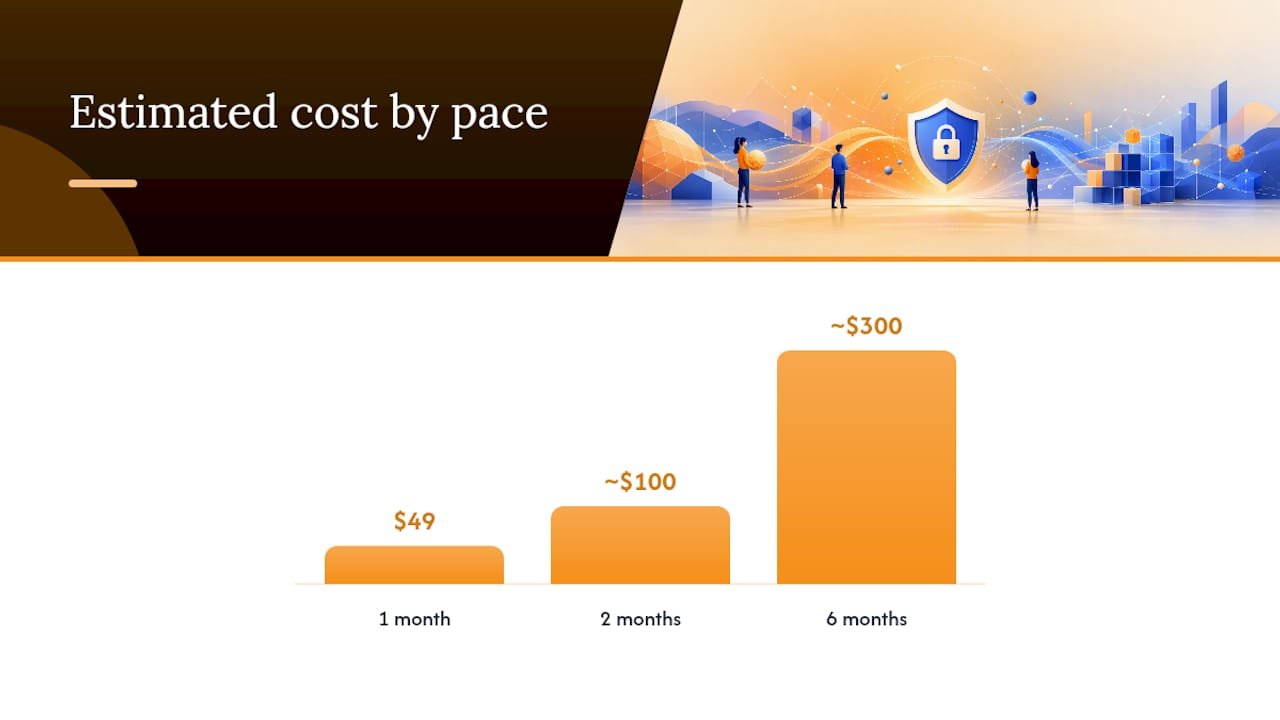
Cost runs through Coursera’s subscription model, typically around $49 a month in the United States, with a free trial period Google occasionally extends. That means your total price depends entirely on your pace:
- A learner who finishes in two months pays roughly $100.
- A learner who stretches the program across six months pays closer to $300.
- Coursera’s free trial window can shave one full billing cycle off the total if you complete early modules quickly.
One underappreciated benefit: graduates get access to CareerCircle, an employer consortium Google partners with to connect certificate holders to hiring companies. It’s not a guaranteed job pipeline, but it’s a real bridge between coursework and recruiters that self-taught learners don’t automatically get.
What Skills and Tools Does the Curriculum Actually Cover?
The curriculum is built around eight courses that move from foundational concepts to applied practice. Here’s the practical sequence:
- Security fundamentals — CIA triad, security frameworks, and basic risk concepts.
- Networking basics — TCP/IP, firewalls, and how traffic moves across a network.
- Linux and SQL — command-line navigation, file permissions, and querying databases for security-relevant data.
- Python scripting — automating repetitive security tasks, a skill almost absent from older, non-Google entry-level programs.
- Detection and response tools — hands-on exposure to SIEM platforms and intrusion detection systems, including Splunk and packet analysis with Wireshark.
- Incident response — triaging alerts, documenting findings, and following escalation procedures.
Each module includes labs that produce something concrete: a completed log analysis, a short Python script, an incident report written the way a real SOC analyst would write one. Those artifacts are the raw material for a portfolio, if you save them rather than letting them disappear into Coursera’s platform.
The curriculum has real gaps worth knowing about before you enroll. It treats advanced cloud security lightly, doesn’t go deep into Windows Active Directory forensics, and offers essentially no penetration testing content. If your goal is a specialized red-team or cloud security role eventually, this certificate is a starting point, not a destination. For readers weighing where this fits into a longer plan, an IT and cybersecurity certification roadmap shows how the stacking typically works.
Do Employers Actually Value This Credential?
Employers value it as a signal of initiative and baseline literacy, not as a substitute for experience or a recognized exam credential. The labor market context helps explain why. The Bureau of Labor Statistics reports a median annual wage of $124,910 for information security analysts, with strong projected job growth. That figure describes the broader occupation, not entry-level hires straight out of a certificate program. Most of that pay ceiling belongs to analysts with several years of experience and often a Security+ plus a specialization.
Statistic Callout: Google reports that about 75% of Career Certificate graduates across all its programs see a positive career outcome, such as a raise, promotion, or new job, within six months of completing a certificate, based on the same independent cost and outcomes review. That figure spans every Google certificate track, not cybersecurity alone, and “positive outcome” includes raises at an existing job, not just new hires.
CompTIA Security+ shows up as a stated or preferred requirement in a large share of entry-level security job postings, which is why the Google curriculum is explicitly designed to prep learners for that exam. The NICE workforce framework from NIST maps out standardized cybersecurity work roles and competencies, and the skills taught in the Google course line up reasonably well with entry-level analyst role definitions under that framework.
Here’s the hiring reality most reviews skip:
- Many hiring managers still want some IT experience, even a help desk stint, before considering a candidate for security roles.
- The certificate can improve your eligibility for screening, but generally does not substitute for proven experience.
- CISA’s workforce development resources consistently emphasize hands-on skill validation and employer collaboration over course completion alone, reinforcing why labs and portfolios carry weight.
What Does This Actually Cost, and What’s the Payback?
Budgeting for this path means accounting for more than the Coursera subscription. Here’s a realistic breakdown:
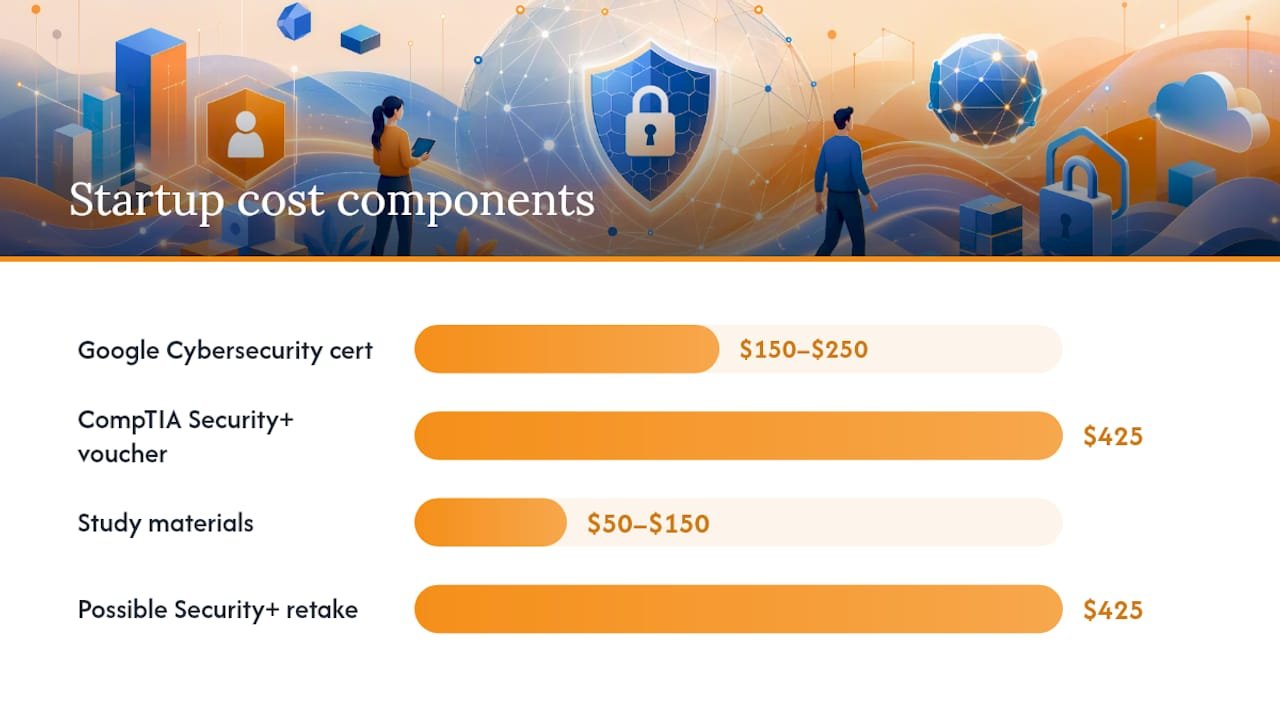
- Google Cybersecurity Certificate: $150 to $250, depending on completion speed.
- CompTIA Security+ exam voucher: roughly $425 at current pricing.
- Study materials for Security+ (practice exams, study guides): $50 to $150.
- Possible retake fee if you don’t pass the first attempt: another $425.
Stack the certificate with Security+ and your realistic total lands between $600 and $875, a figure confirmed by the same independent program review.
Two scenarios illustrate the range. A disciplined learner who finishes the Google course in six weeks, studies efficiently for Security+, and passes on the first attempt spends closer to $625 total. A learner who takes the full six months on Coursera, needs a Security+ retake, and buys extra study materials could spend closer to $875.
Either way, the math against even a modest entry-level salary is favorable. Starting salaries for entry-level SOC analyst or IT security support roles can often cover the cost of training investment relatively quickly. The real cost isn’t the money. It’s the months of consistent study most people underestimate.
How to Turn Course Completion Into an Actual Job Offer
Finishing the certificate is the easy part. Converting it into interviews takes a deliberate follow-up plan.
-
Save every lab artifact as you go. Export your log analysis reports, Python scripts, and incident write-ups into a personal folder or GitHub repository the moment you finish each module. Don’t wait until the end of the course to try to reconstruct them.
-
Write a short case study for each major project. For your incident response lab, write two paragraphs explaining what happened, what you found, and what you’d recommend. This is exactly the kind of artifact a cybersecurity portfolio built step by step turns into interview material.
-
Start Security+ prep within two weeks of finishing the Google course. Momentum matters. Give yourself a 60 to 90 day runway to study and sit the exam while the foundational concepts are still fresh.
-
Rebuild your resume around outcomes, not course titles. Instead of “completed Google Cybersecurity Certificate,” write something like “analyzed network logs using Splunk to identify simulated intrusion patterns and documented findings in incident reports.” A resume guide focused on early IT careers can help you translate coursework into language hiring managers respond to.
-
Apply broadly to tier-1 SOC and IT security support roles, and register with CareerCircle if you have access through your certificate. Widen your search to entry-level cybersecurity roles beyond the SOC analyst title alone. Help desk security, junior GRC, and IT support roles with a security component often hire faster.
-
Run mock interviews before real ones. Practice explaining your Python script or your incident report out loud. Hiring managers care less about polished delivery than about whether you understand what you built and why.
Pro Tip: Treat every lab like a work sample you’d hand to a hiring manager, not homework you’ll delete after grading. The habit of documenting your own work is a skill in itself, and it’s one that separates candidates who “took a course” from candidates who can talk through real evidence.
Where Hands-On, Instructor-Led Training Fits Into This Plan
Some training organizations build programs specifically around closing the gap between coursework and employment, pairing CompTIA exam preparation with hands-on labs and live mentoring rather than a purely self-paced video format.
For some learners, self-paced Coursera study works fine. But learners who struggle to stay consistent without deadlines, or who want direct feedback on lab work before an employer ever sees it, tend to move faster with instructor-guided support. That’s especially true for veterans transitioning out of structured military environments into civilian certification tracks, where mentorship and cohort accountability shorten the learning curve considerably. A beginner’s cybersecurity training guide breaks down how these instructor-led paths differ from the self-study model in practice.
Who Should Enroll, and What Happens After?
The Google Cybersecurity Certificate makes the most sense for true beginners, career changers with several months of consistent study time, and veterans transitioning into civilian IT roles who want a low-cost entry point.
- Skip or deprioritize it if you already hold IT experience or a Security+ equivalent. Go straight to Security+ or a specialized certification instead.
- Pair it immediately with Security+ if your target is a government or DoD-adjacent role, where Security+ is frequently a hard requirement rather than a preference.
- Budget the full timeline, not just the course length. Three to six months of study, plus another two to three months for Security+ prep, is the realistic runway.
The one condition that makes this certificate genuinely worth it: you finish it, document the work, and keep moving toward Security+ and a portfolio instead of stopping at the certificate itself.
A Note on Pacing and Persistence
Go slow enough to actually retain the Linux and Python material, not just click through it. Treat every lab as evidence you’ll eventually hand to an employer, because that’s exactly what it becomes.
— Alden
Ready for Instructor-Led Support on the Same Path?
Another option to self-paced Coursera study offers hands-on labs, live mentoring, and direct CompTIA Security+ exam preparation built into one program, so the stacking plan described above happens with guidance instead of guesswork.
If you’re a career changer, veteran, or entry-level IT professional who wants structured accountability rather than another subscription to manage alone, explore Total Cyber Academy’s beginner-focused cybersecurity training program and see how the curriculum lines up with your timeline and budget before you commit to a path.
Sources
- Information security analysts – U.S. Bureau of Labor Statistics
- NICE | NIST
- Is the Google Cybersecurity Certificate Worth It? (2026) | Kinja